


Comprehensive analysis of the FAA Emergency Order Navigable Airspace Operating Limitations affecting 40 major airports. Learn about implementation timelines, stakeholder impacts, and compliance strategies.
The Federal Aviation Administration (FAA) has issued an emergency order establishing operating limitations on the use of navigable airspace affecting 40 major airports across the United States. This significant regulatory action comes amid ongoing staffing challenges, equipment issues, and the federal government shutdown, creating ripple effects throughout the National Airspace System (NAS). Aviation RegWatch provides a comprehensive breakdown of this critical development and its implications for industry stakeholders.
Policy Overview: Targeted Scheduling Limits
The FAA Emergency Order establishes reduced targeted scheduling limits on operations at 40 major airports nationwide. The order, which took effect on November 7, 2025, initially implements a 4% reduction in air traffic operations, with plans to increase to 10% if necessary. The limitations apply to scheduled operations at affected facilities between 6 a.m. and 10 p.m. local time.
Key provisions of the emergency order include:
- Mandatory flight reductions at 40 high-volume airports across the United States
- Initial 4% reduction in domestic flight operations with potential increases to 10%
- Exemptions for international flights to minimize disruption to global air travel
- Special provisions for essential services and emergency operations
- Implementation timeline beginning November 7, 2025, with no specified end date
The FAA has emphasized that these measures are temporary but necessary to maintain safe operations during the current staffing and funding challenges. The order provides airlines with a framework for strategic reductions while maintaining essential connectivity.
Background & Context: Why This Emergency Action?
The FAA’s emergency order comes in response to a confluence of factors that have created unprecedented pressure on the National Airspace System. The ongoing federal government shutdown, now in its 37th day, has left approximately 11,000 air traffic controllers working without pay. This situation has been compounded by pre-existing staffing shortages, with the system already operating approximately 3,000 controllers short of optimal levels.

According to FAA Administrator Bryan Bedford, “I’m not aware in my 35-year history in the aviation market where we’ve had a situation where we’re taking these kinds of measures. We’re in new territory in terms of government shutdowns.”
Several critical factors precipitated this emergency action:
1. Staffing Challenges
The Philadelphia TRACON (PHL), which oversees the Newark area, is currently operating at 71.9% of targeted staffing levels. Area C, specifically responsible for Newark operations, is at just 63% staffed. The situation is further complicated by an arrangement that will see 16 Certified Professional Controllers (CPCs) return to the New York TRACON by July 2026.
2. Equipment Issues
Recent technology outages at major facilities have exacerbated operational challenges. The FAA is implementing immediate measures to shore up equipment reliability, but these disruptions have already caused significant delays and operational impacts that ripple throughout the system.
3. Government Shutdown
The prolonged federal government shutdown has left thousands of essential aviation workers, including air traffic controllers, working without pay. Transportation Secretary Sean Duffy noted that while many controllers could manage missing one paycheck, “none of us can manage missing two paychecks.”
4. Construction Impacts
At Newark Liberty International Airport (EWR), a major runway closure has further strained capacity. Runway 4L-22R was closed daily from April through June 2025, with weekend closures continuing through December 2025, significantly reducing operational capacity.
Stakeholders & Affected Parties
The FAA Emergency Order on Navigable Airspace Operating Limitations has widespread implications for various aviation stakeholders. Understanding who is affected and how is crucial for effective response planning.

Major Airlines
The nation’s largest carriers have already begun implementing flight reductions in compliance with the FAA directive.
| Airline | Announced Reductions | Period Affected | Customer Accommodations |
| United Airlines | 4% of flights (system-wide) | Friday through Sunday | Rebooking on alternative flights |
| Delta Air Lines | 170 flights Friday, fewer on Saturday | Friday and Saturday | Throughout the restriction period |
| Southwest Airlines | 120 flights | Friday | Flexible rebooking options |
| American Airlines | Not specified | Throughout restriction period | Change fee waivers and refund options |
Other Affected Stakeholders
1. Airports
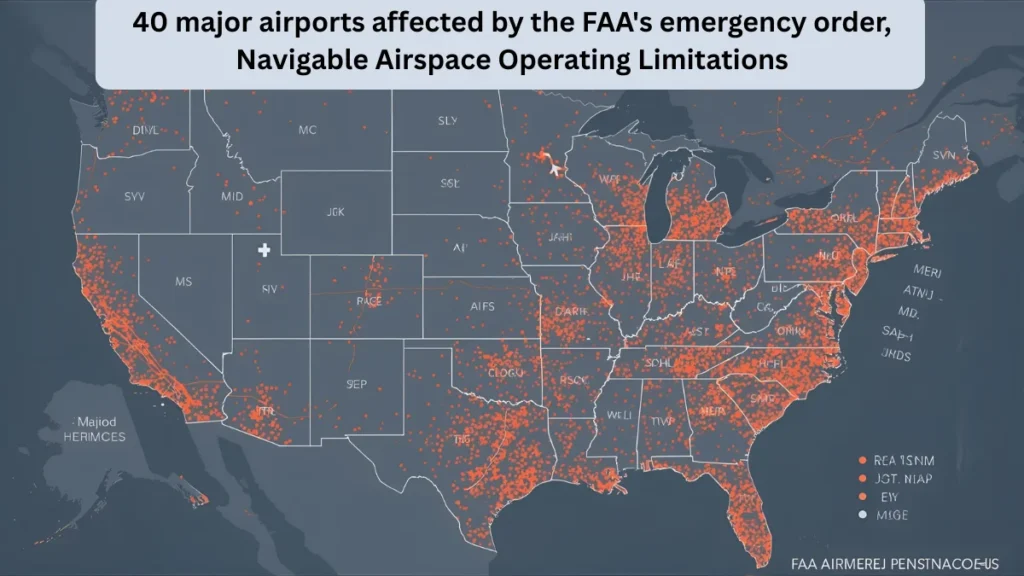
The 40 affected airports include major hubs across 25+ states, with significant impacts at Atlanta, Charlotte, Denver, Dallas/Fort Worth, Orlando, Los Angeles, Miami, and San Francisco. All three Washington, DC area airports are included, affecting travel for lawmakers and government officials.
2. Passengers
The Cirium analytics firm estimates that these reductions could affect as many as 1,800 flights and 268,000 passenger seats. With the Thanksgiving holiday approaching, travelers face potential disruptions during one of the busiest travel periods of the year.
3. Air Traffic Controllers
Controllers continue working without pay during the shutdown, with many taking second jobs to make ends meet. The emergency order aims to alleviate some pressure on this essential workforce while maintaining system safety.
Industry & Expert Reactions
The FAA Emergency Order has elicited varied responses from industry stakeholders, aviation bodies, and experts. These perspectives provide valuable context for understanding the broader implications of these airspace limitations.
“We want to thank the FAA for striking a thoughtful balance to proactively address safety through this order, which reflects the diverse needs of all stakeholders within America’s aviation system.”
— Ed Bolen, NBAA President and CEO
United Airlines CEO Scott Kirby emphasized that safety remains the top priority: “The goal of regulators is to relieve pressure on the aviation system so that we can all continue to operate safely. That is the FAA’s highest priority, and ours as well. No matter what environment we’re operating in, we will not compromise on safety.”
The International Air Transport Association (IATA) has expressed concern about the global ripple effects of these restrictions, particularly for international carriers operating to and from the United States. While international flights are exempt from the reduction requirements, they may still face delays and operational challenges due to system-wide constraints.
“We’re facing the potential of almost a shutdown of the national airspace… You cannot continue to operate this in a way that ignores the diminution of safety. This is a dire situation.”
— John Nance, Aviation Expert
The US Travel Association highlighted the broader economic implications, with President and CEO Geoff Freeman stating that the government shutdown was “forcing difficult operational decisions that disrupt travel and damage confidence in the US air travel experience.”
The Port Authority of New York and New Jersey, which operates several affected airports, has requested collaboration with the DOT and FAA to create a transparent plan to return to full operating capacity, emphasizing the need for continued federal investment in controller staffing and infrastructure improvements.
The US Travel Association highlighted the broader economic implications, with President and CEO Geoff Freeman stating that the government shutdown was “forcing difficult operational decisions that disrupt travel and damage confidence in the US air travel experience.”
The Port Authority of New York and New Jersey, which operates several affected airports, has requested collaboration with the DOT and FAA to create a transparent plan to return to full operating capacity, emphasizing the need for continued federal investment in controller staffing and infrastructure improvements.
Implementation Challenges & Risks
Implementing the FAA Emergency Order poses several significant challenges and risks for the aviation industry. Understanding these obstacles is essential for effective contingency planning and mitigation strategies.
Safety Benefits
- Reduced controller workload during staffing shortages
- Decreased congestion in high-traffic airspace sectors
- More manageable traffic flow during equipment limitations
- Improved ability to maintain separation standards
- Enhanced capacity to respond to weather and other disruptions
Operational Challenges
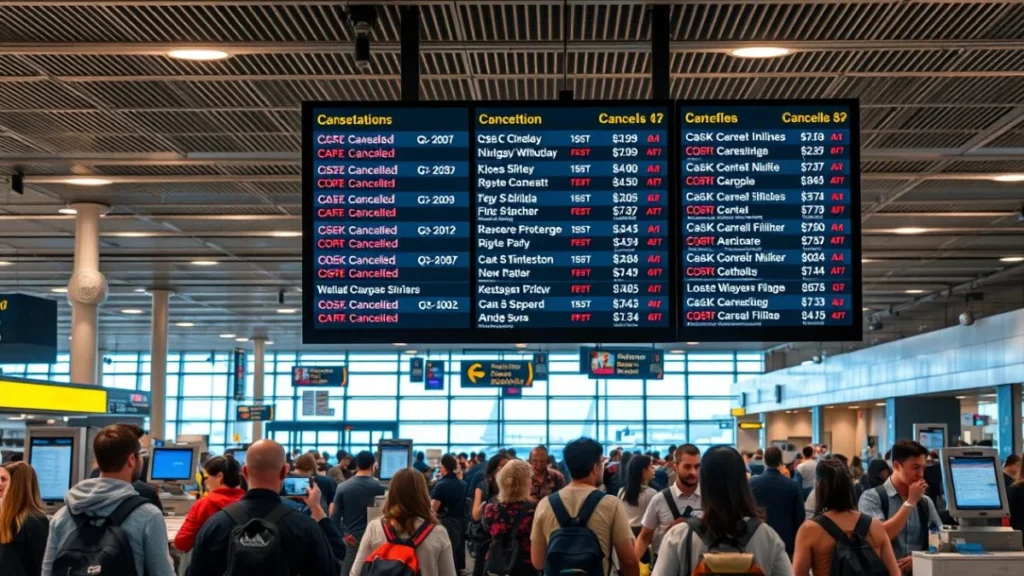
- Significant disruption to airline schedules and network planning
- Passenger displacement and rebooking complications
- Revenue losses for airlines, airports, and related businesses
- Crew scheduling and aircraft positioning difficulties
- Potential for cascading delays throughout the system
Key Implementation Risks
Holiday Travel Disruption
With Thanksgiving approaching, one of the busiest travel periods of the year, the timing of these restrictions could lead to significant passenger disruption and public relations challenges for airlines and the FAA.
Competitive Imbalance
Concerns have been raised about how flight reductions are allocated among carriers. The American Economic Liberties Project noted that at some airports, a single carrier operates 65-70% of flights, raising questions about equitable distribution of cuts.
Small Community Access
There’s a risk that service to smaller communities could be disproportionately affected as airlines prioritize higher-yield routes when making reduction decisions, potentially isolating rural areas from the air transportation network.
Critical Concern: The FAA has acknowledged that this situation is unprecedented, with Administrator Bedford stating, “I’m not aware in my 35-year history in the aviation market where we’ve had a situation where we’re taking these kinds of measures. We’re in new territory in terms of government shutdowns.”
Solutions & Best Practices
While the FAA Emergency Order presents significant challenges, airlines and other stakeholders can implement several strategies to minimize disruption and maintain operational efficiency during this period of airspace limitations.

1. For Airlines
How should airlines prioritize which flights to cancel?
Airlines should consider multiple factors when selecting flights for cancellation, including:
- Routes with multiple daily frequencies where passengers can be easily accommodated on other flights
- Flights with lower load factors are used to minimize passenger impact
- Preserving connections to smaller communities with limited service options
- Maintaining international connections that support the global network
- Considering aircraft and crew positioning requirements to minimize network disruption
What passenger communication strategies are most effective?
Clear, proactive communication is essential. Best practices include:
- Notifying affected passengers as early as possible about cancellations or significant delays
- Providing multiple rebooking options through various channels (app, website, phone)
- Clearly explaining compensation policies and passenger rights
- Establishing dedicated customer service channels for affected flights
- Using social media for broad updates while providing personalized options through direct channels
2. For Airports
Resource Allocation
Airports should adjust staffing and resource allocation to align with the revised flight schedules. This includes reassigning customer service staff to assist with rebookings and passenger inquiries, and ensuring ground handling resources are optimized for the revised schedule.
Facility Management
Consider adjusting terminal operations to accommodate changes in passenger flow, including potential extended dwell times. Ensure adequate seating, charging stations, and amenities are available in areas where passengers may experience longer waits due to reduced flight frequencies.
3. For Passengers
Passenger Action Checklist
- Check flight status frequently in the days leading up to travel
- Download airline mobile apps for real-time notifications and rebooking options
- Consider booking flights earlier in the day to allow for recovery options if cancellations occur
- Review airline policies regarding cancellations and compensation
- Be aware of your rights under DOT regulations for significant delays and cancellations
- Have alternative travel plans prepared, especially for critical trips
Future Outlook
The FAA Emergency Order on Navigable Airspace Operating Limitations represents a significant but temporary measure to address immediate safety concerns. Understanding the potential evolution of these restrictions and their long-term implications is crucial for industry planning.

Short-Term Projections
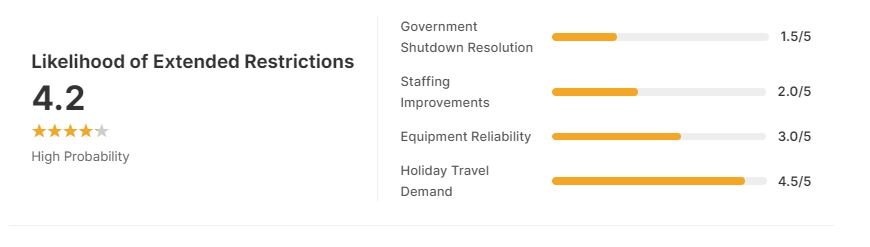
With the government shutdown showing no signs of immediate resolution and the Thanksgiving travel period approaching, industry experts anticipate that these restrictions could remain in place through the end of the year. The initial 4% reduction could increase to the projected 10% if staffing and equipment challenges persist.
Long-Term Implications
Regulatory Evolution
This emergency action could catalyze more permanent changes to airspace management practices. United Airlines has already suggested that Newark Liberty International Airport (EWR) should return to Level 3 slot-controlled status to manage congestion better and improve scheduling transparency.
Infrastructure Investment
The current crisis highlights the critical need for sustained investment in aviation infrastructure and personnel. The Port Authority of New York and New Jersey has called for “continued federal investment to prioritize improvements of CPCs and infrastructure at all the NY/NJ area airports

The FAA has indicated that these emergency measures will be continuously evaluated based on staffing levels, equipment performance, and overall system safety. Any transition back to normal operations will likely be gradual, with targeted restrictions lifted as conditions improve at specific facilities.
Suggestions for Policy Amendments
Based on industry feedback and operational realities, several potential refinements to the FAA Emergency Order could enhance its effectiveness while minimizing disruption to the aviation system.
Operational Flexibility
- Implement dynamic capacity adjustments based on real-time staffing levels
- Allow carriers to swap allocated reduction slots within their networks
- Create an exemption process for critical community service routes
- Establish “capacity banks” for recovering operations during improved conditions
- Develop flexible parameters for holiday travel periods
Transparency Enhancements
- Publish daily capacity forecasts for affected facilities
- Create a public dashboard tracking staffing levels and equipment status
- Establish a formal consultation process with affected stakeholders
- Provide regular briefings on progress toward normal operations
- Develop clear metrics for when restrictions will be lifted
Equity Considerations
- Ensure proportional distribution of reductions across carriers
- Protect service to small and rural communities
- Maintain competitive balance at concentrated hub airports
- Consider economic impact when allocating reductions
- Establish appeals process for disproportionately affected parties
Industry stakeholders have also suggested that the FAA consider implementing a formal cap on peak-hour flight authorizations at certain congested airports, potentially limiting any single carrier to no more than 50% of the peak-hour slots to maintain competitive balance and ensure access for smaller carriers.
Critical Consideration: Any policy amendments must prioritize safety while balancing operational needs. The primary goal remains maintaining the integrity and safety of the National Airspace System during this period of extraordinary challenges.
Conclusion
The FAA Emergency Order Establishing Operating Limitations on the Use of Navigable Airspace represents an unprecedented but necessary measure to maintain safety during extraordinary circumstances. The combination of government shutdown impacts, staffing shortages, and equipment challenges has created a perfect storm requiring decisive action.
Source:
Emergency Order Establishing Operating Limitations on the Use of Navigable Airspace
Also Read
FAA Helicopter Routes Update and Zones at IAD, BWI: Key Policy Changes Explained

