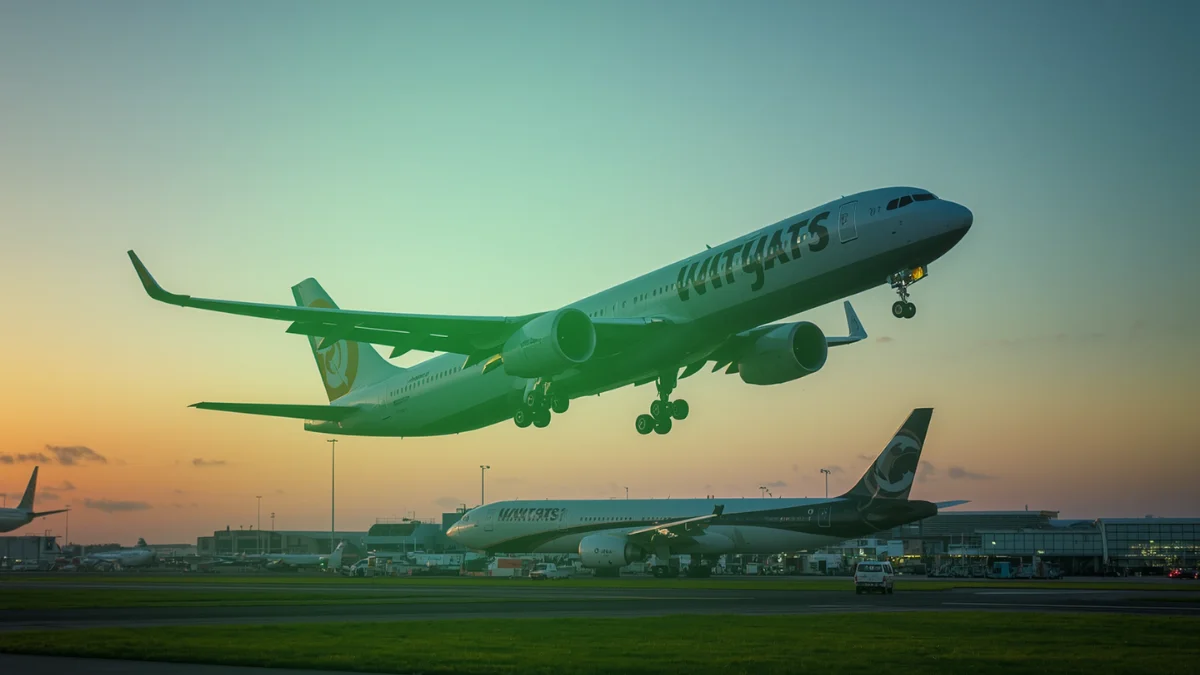
Compliance Alert | ICAO CORSIA | International Aviation Emissions
Last Updated: March 29, 2026 | Sources: ICAO, IATA, HFW, CEEZER, Econetix
Quick Summary
CORSIA Phase 2 begins January 1, 2027. What was once largely a voluntary carbon offsetting program for international aviation is now a binding legal obligation.
For US carriers, this is a major compliance step-up. Emissions monitoring was already required under Phase 1 (2024–2026) — Phase 2 adds mandatory offsetting across a much wider route network, now including China, India, Brazil, and Russia.
Airlines without solid strategies for emissions tracking, offset procurement, and SAF integration face real financial and regulatory risk.
Quick Facts
| Item | Details |
|---|---|
| Scheme | CORSIA — Carbon Offsetting and Reduction Scheme for International Aviation |
| Authority | ICAO (International Civil Aviation Organization) |
| Phase 2 Start | January 1, 2027 |
| Phase 2 End | December 31, 2035 |
| Participation | Mandatory for nearly all ICAO member states |
| New States Joining | China, India, Brazil, Russia (not in Phase 1) |
| Compliance Mechanism | CORSIA-Eligible Emission Units (CEEUs) / SAF use |
| Phase 1 Offsetting Cost (IATA est.) | $4–5 billion total for 2024–2026 |
| Phase 2 Cost Increase | Projected 30%+ above Phase 1 levels |
| Applies To | All airlines operating international routes between CORSIA-participating states |
| US Participation | Yes — US is a CORSIA participant |
What Changes in Phase 2
CORSIA operates across three phases. The Pilot Phase (2021–2023) had minimal offsetting demand due to pandemic-suppressed traffic. Phase 1 (2024–2026) is voluntary, with 126 states participating. Phase 2 (2027–2035) is mandatory for nearly all ICAO members.
The shift from Phase 1 to Phase 2 means:
- Participation becomes compulsory for virtually all ICAO member states — no longer an opt-in arrangement
- Route coverage expands dramatically: only flights between CORSIA-participating states are covered. Phase 2 adds major aviation nations, including China, India, Brazil, and Russia, bringing a substantial volume of previously uncovered international routes into the scheme
- Offsetting obligations are formally calculated and enforced by each state’s civil aviation authority based on reported emissions data
- Offset demand will nearly double: ICAO projects a 30%+ increase in compliance costs from Phase 1 to Phase 2 as demand for CORSIA-Eligible Emission Units (CEEUs) grows
- CEEU supply constraints intensify: 67% of respondents in a PwC/IETA survey expect an undersupply of eligible credits by 2027
How CORSIA Offsetting Is Calculated
Airlines must offset the portion of their international CO₂ emissions that exceeds a sector-wide growth baseline (set at 85% of 2019 emissions). The calculation:
- The airline reports annual international flight emissions
- The state applies ICAO’s published Sector Growth Factor to determine the offsetting obligation
- The airline must purchase and cancel a sufficient number of CEEUs by the compliance deadline
- Where total offsetting requirements exceed 3,000 tonnes of CO₂, CEEUs must be canceled by January 31, 2028 (for 2027 emissions) or 60 days after state notification
Why Phase 2 Matters More Than Phase 1
Scale. Phase 1 covers routes between the 126 states with voluntary participants. Phase 2 covers nearly all international routes globally. This is not an incremental change — it is a structural expansion that brings the majority of global international aviation emissions under a binding offsetting obligation.
Cost. IATA estimates Phase 1 offsetting costs at approximately $4–5 billion across 2024–2026. Phase 2 compliance costs are projected to increase by over 30% as demand for eligible credits outpaces supply. Airlines that procure credits late in the compliance cycle face a seller’s market.
Credit supply risk. The pool of CORSIA-Eligible Emission Units is limited by ICAO’s rigorous approval criteria. Gold Standard and Verra have been approved to supply credits for Phase 2 (2027–2029), but supply growth lags demand projections. Airlines that have not established long-term credit procurement relationships face availability and price risk.
SAF as the preferred compliance pathway. SAF use reduces emissions at the source and counts directly toward CORSIA obligations. For airlines with access to SAF, blending is a more operationally and reputationally preferable compliance tool than purchasing offsets — but supply and cost constraints remain challenges.
Who Is Affected
US Network Carriers (American, Delta, United). These airlines operate extensive international route networks, including trans-Pacific routes to China, one of the largest additions to Phase 2 coverage. Their CORSIA obligations will increase materially in 2027.
US Low-Cost Carriers with International Operations, Southwest, JetBlue, Spirit, and others, operating international routes face Phase 2 compliance requirements. Carriers with limited sustainability infrastructure face the greatest operational transition risk.
Regional Carriers Operating International Routes. Any airline operating international routes between CORSIA-participating states is covered. Regional operators with cross-border routes (US–Canada, US–Mexico, US–Caribbean) should verify their obligations under Phase 2 route coverage.
Cargo carriers and freight operators, including FedEx, UPS, and Atlas Air, that operate international cargo routes are covered by CORSIA. High-volume international cargo operations generate substantial emissions obligations.
Compliance, Sustainability, and Finance Teams CORSIA compliance requires emissions data management, third-party verification, state reporting, CEEU procurement, and cancellation documentation. This is a multi-department operational function, not solely a responsibility of the sustainability team.
Aviation Fuel Suppliers and SAF Producers: Airlines seeking to use SAF for CORSIA credit must ensure the fuel meets ICAO’s sustainability criteria — which differ from those under ReFuelEU or the UK SAF Mandate. Verification chains matter.
CORSIA Phase 2 Compliance Timeline
| Milestone | Date |
|---|---|
| CORSIA Phase 1 (voluntary) | January 1, 2024 – December 31, 2026 |
| Phase 1 final offsetting requirements notified to airlines | By November 30, 2027 |
| Phase 1 CEEUs must be cancelled | By January 31, 2028 (if obligation >3,000t CO₂) |
| CORSIA Phase 2 begins — MANDATORY | January 1, 2027 |
| Phase 2 emissions Year 1 notification to airlines | By November 30, 2028 |
| Phase 2 first cancellation deadline | By January 31, 2029 (or 60 days after state notification) |
| Phase 2 ends | December 31, 2035 |
Operational Impact Analysis
Emissions Monitoring and Data Infrastructure: Airlines must accurately monitor and report CO₂ emissions for all covered international routes. Phase 2 adds routes that may not yet be included in emissions-tracking systems — particularly new routes to and from Phase 2-joining states. IT and data systems must be updated before January 1, 2027.
CEEU Procurement Strategy. The CORSIA credit market is characterized by limited supply and growing demand. Airlines that wait until they are formally notified of Phase 2 obligations (in late 2028 for Year 1) before beginning procurement face elevated risks of higher prices and limited availability. Multi-year forward procurement contracts with approved credit suppliers are the strategic best practice.
SAF Integration: SAF reduces the volume of CEEUs an airline must purchase. Given projected credit shortages, every gallon of CORSIA-eligible SAF used directly reduces procurement exposure. Airlines should prioritize SAF procurement for international routes with the highest CORSIA obligations.
Third-Party Verification CORSIA requires emissions data to be verified by an accredited third party before state submission. Verification lead times must be factored into compliance calendars. With Phase 2 route expansion, verification scope increases — capacity should be contracted well in advance.
Financial Exposure: IATA estimates Phase 1 costs at $1.3–$1.7 billion annually for 2025–2026. Phase 2 cost increases of 30%+ suggest an annual industry-wide exposure of $2–3 billion. Individual airline exposure depends on its route network, fleet efficiency, SAF blending levels, and the timing of credit procurement.
Industry Response
IATA has consistently advocated for a well-functioning CORSIA credit market with adequate supply and robust integrity standards. The association warns that credit undersupply — projected by a majority of industry participants — represents a systemic compliance risk.
Airlines for America (A4A) supports CORSIA as the framework for international aviation emissions reduction and has lobbied for US domestic SAF incentives (including the 45Z credit) as the most effective way to reduce member airlines’ CORSIA offset purchasing requirements.
Gold Standard and Verra, approved as CEEU suppliers for Phase 2 (2027–2029), have each made public statements about their pipeline of eligible projects and the importance of credit integrity.
Environmental groups have raised concerns about CORSIA’s reliance on offsets rather than direct emissions reduction, and have called for stricter eligibility criteria and more ambitious SAF blending requirements.
Official Sources
- ICAO CORSIA Programme Overview
- ICAO CORSIA Eligible Emission Units — Approved Standards
- IATA CORSIA Compliance Resources
- HFW: Airline Offsetting Obligations Under CORSIA Explained
- FAA CORSIA Implementation Guidance
Action Steps
US airlines and cargo operators must:
- Immediately audit Phase 2 route coverage: identify all international routes that will be covered under Phase 2 due to the participation of newly participating states (China, India, Brazil, Russia). Update emissions monitoring systems before January 1, 2027
- Verify third-party verification contracts: ensure accredited verification bodies are engaged and scoped for Phase 2 route expansion before late 2026
- Build a CEEU procurement strategy now: do not wait for Phase 2 notifications. Establish relationships with approved credit suppliers (Gold Standard, Verra) and explore multi-year forward contracts
- Maximize SAF blending on covered routes: SAF directly reduces CORSIA offset obligations. Prioritize CORSIA-eligible SAF procurement — ensuring compliance with ICAO’s sustainability criteria, which differ from those under ReFuelEU or the UK SAF Mandate
- Integrate CORSIA costs into 2027 financial planning: Phase 2 offsetting costs should be reflected in fuel and sustainability budget lines for FY2027 and beyond
- Engage US regulatory agencies: the FAA administers US CORSIA participation. Airlines should maintain an active dialogue with the FAA on Phase 2 reporting requirements and state notification timelines
Frequently Asked Questions
Is CORSIA Phase 2 mandatory for all airlines?
Yes — for airlines operating international routes between CORSIA-participating states. Participation in Phase 2 is mandatory for nearly all ICAO member states, which together serve the vast majority of global international aviation routes.
What is a CORSIA-Eligible Emission Unit (CEEU)?
A CEEU is a carbon offset credit that meets ICAO’s eligibility criteria — demonstrating real, measurable, and permanent emissions reductions. Not all carbon credits qualify. Only credits from ICAO-approved standards (including Gold Standard and Verra for Phase 2) may be used.
Can SAF substitute for CEEU purchases?
Yes. SAF meeting ICAO’s sustainability criteria can be used to reduce CORSIA offsetting obligations, directly replacing the need for equivalent CEEU purchases. SAF must meet ICAO-specific eligibility standards, which differ from EU and UK SAF mandate criteria.
What routes are newly covered in Phase 2?
Routes to and from states that did not participate in Phase 1 — most notably China, India, Brazil, and Russia — will be covered for the first time in Phase 2. Trans-Pacific routes from the US to China represent a significant volume of newly covered emissions.
What routes are newly covered in Phase 2?
Routes to and from states that did not participate in Phase 1 — most notably China, India, Brazil, and Russia — will be covered for the first time in Phase 2. Trans-Pacific routes from the US to China represent a significant volume of newly covered emissions.
What routes are newly covered in Phase 2?
Routes to and from states that did not participate in Phase 1 — most notably China, India, Brazil, and Russia — will be covered for the first time in Phase 2. Trans-Pacific routes from the US to China represent a significant volume of newly covered emissions.
What happens if an airline fails to meet CORSIA obligations?
Non-compliance is managed by each state’s civil aviation authority. Penalties vary by jurisdiction. The FAA is the responsible US authority. Persistent non-compliance could affect operating certificates, bilateral air service agreements, and market access.
When must Phase 2 Year 1 offsetting obligations be met?
The state must notify airlines of their 2027 offsetting requirement by November 30, 2028. Where obligations exceed 3,000 tonnes CO₂, CEEUs must be canceled by January 31, 2029, or 60 days after state notification, whichever is later.
Does CORSIA apply to domestic US flights?
No. CORSIA applies only to international aviation. Domestic US flights are governed by US domestic environmental regulations.
Editorial Note: This article is based on ICAO official CORSIA documentation, IATA compliance guidance, and publicly available legal and industry analysis. Specific offsetting obligations for individual airlines are calculated by their state of registry’s civil aviation authority based on reported emissions data. This article does not constitute legal or compliance advice. Airlines should consult their legal and regulatory advisors for jurisdiction-specific CORSIA compliance planning.
Researched and reviewed using official ICAO, IATA, FAA, and aviation legal sources.