
A fan blade came off a 737-800; debris hit the fuselage, and the aircraft descended under emergency. The FAA’s answer — proposed for all 3,450 US-registered CFM56-7B engines — is a visual inspection. Comments close 27 November 2026.
FAA NPRM · FR Doc. 2026-21852Comments due 27 November 2026 3,450 US-registered engines
Quick Answers
| Which engines are affected? | All CFM56-7B variants — from the -7B20 through the -7B27E — as installed on the Boeing 737NG family. |
|---|---|
| What happened? | A CFM56-7B26/3 fan blade separated in flight on a Boeing 737-800. The engine was shut down, debris penetrated the fuselage, the aircraft lost pressurization, and the crew made an emergency descent. |
| What is being proposed? | A visual inspection of all fan blades, with replacement of any blade showing unserviceable findings — plus mandatory reporting of those findings to CFM. |
| What counts as unserviceable? | Cracks, tears, tip curls, and local leading-edge distortion. |
| When must the inspection happen? | Within 400 flight cycles or 90 days of the rule’s effective date, whichever comes first. Engines not yet installed: before further flight. |
| Is this a final rule? | No. It is an NPRM. Comments close 27 November 2026 under Docket No. FAA-2026-11817. |
| What does it cost? | The FAA estimates the inspection at $85 per enginefor the inspection —about $293,250 across the US fleet. Replacement costs are estimated separately. |
Related > FAA AD 2026-20-11: Trent 700 LPC Blade Replacement Rules
Quick Compliance Summary
- Plan the inspection now, not on adoption. If adopted, the compliance window is 400 flight cycles or 90 days — whichever comes first. For a short-haul 737NG fleet, 90 days arrives quickly.
- Get CFM Service Bulletin CFM56-7B S/B 72-1119. Dated September 8, 2026, paragraph 3.C. is the inspection instruction the FAA proposes to incorporate.
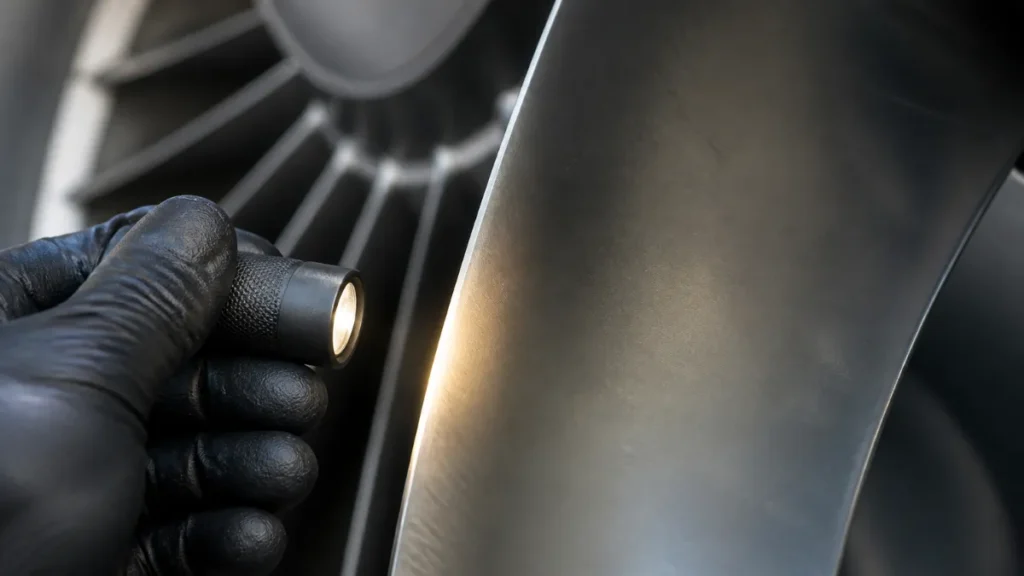
- Brief your borescope-free inspection crews. This is a visual check. The unserviceable list is specific: cracks, tears, tip curls, leading-edge distortion.
- Anything found means the blade comes out before further flight. Replacement must be a new, zero-hour blade, or one that has passed the same inspection.
- Findings must reach CFM. The proposal makes reporting unserviceable findings to the manufacturer a mandatory step — that data feeds the final fix.
- Treat this as the opening move. The FAA calls it interim action. Once the root cause is known, a final AD is likely to be larger.
Who Should Read This
Essential: Operators of 737NG series aircraft; powerplant and CAMO engineering teams; engine shops overhauling CFM56-7Bs; and line-maintenance managers planning inspection capacity.
Important: Safety managers tracking fan-blade-out events; lessors with 737NG assets; parts traders in the CFM56 blade market; and compliance teams commenting on FAA rulemaking.
At a Glance
| Element | Detail |
|---|---|
| Action | NPRM — proposed AD, 14 CFR Part 39 |
| Identifiers | FR Doc. 2026-21852 · Docket No. FAA-2026-11817 · Project Identifier AD-2026-01020-E |
| Publication | Federal Register Vol. 91, No. 206, pages 67532–67535, 27 October 2026 |
| Comments close | 27 November 2026 |
| Applicability | All CFM56-7B20 through -7B27E engine variants (full list in the NPRM) |
| Incorporated document | CFM Service Bulletin CFM56-7B S/B 72-1119, dated September 8, 2026 |
| Inspection window | 400 flight cycles or 90 days after the effective date, whichever occurs first |
| US fleet impact | 3,450 engines; $85 per engine for the inspection; $293,250 total |
Related > FAA AD 2026-20-14: 737NG Stabilizer Freeplay Checks Explained
What Happened
A Boeing 737-800 powered by CFM56-7B26/3 engines experienced a fan blade separation in flight. The crew shut the engine down. Debris penetrated the fuselage. The airplane lost pressurization and made an emergency descent. Nobody, in the language of the NPRM, is named — the document records the event, not the airline.
The manufacturer’s root-cause investigation is ongoing. The FAA’s summary of the preliminary finding is precise: deformation to the fan blades induced a localized vibratory response in the failed blade. That matters, because it points away from a single rogue part and toward a condition that could exist elsewhere in the fleet.
The FAA’s background section also goes back to 17 April 2018, when a Southwest Airlines flight suffered a CFM56-7B fan blade fracture that destroyed the engine inlet cowl and sent debris into the fuselage—the accident that reshaped US fan-blade inspection policy.
The FAA states it has received no factual information indicating that the 2018 incident is related to the current event. Readers should register both halves of that sentence: the regulator is reminding the industry of the precedent, while declining to link the two.
What the NPRM Requires
The proposal has three moving parts.
First, the inspection. A visual inspection of the fan blades, performed to the Accomplishment Instructions in paragraph 3.C. of CFM Service Bulletin CFM56-7B S/B 72-1119, dated September 8, 2026. For engines already installed on aircraft, the window is 400 flight cycles or 90 days after the AD’s effective date, whichever comes first. For engines not yet installed, the inspection is due before further flight.
Second, the response. If an inspector finds anything on the unserviceable list—cracks, tears, tip curls, or local distortion on the leading edge—the blade is removed from service before further flight. The replacement must be a serviceable fan blade, defined as a new, zero-hour blade, or one that has passed the same inspection. The proposal also adds inspections of adjacent blades, depending on findings.
Third, the report. Any operator finding an unserviceable blade must send the inspection results to CFM. This is not paperwork for its own sake. The NPRM is explicit that these reports give the manufacturer a better picture of the failure’s nature, cause, and extent — the input it needs to design the final fix.
The FAA prices the inspection at one work-hour, $85 per engine, with no parts. Across 3,450 US-registered engines, that is $293,250. The estimate for necessary replacements and any additional inspections is published separately from the headline figure—and it will vary wildly between a fleet with zero findings and one with several.
Why “Interim Action” Is the operative Phrase
The NPRM labels itself interim action, and that framing should drive every compliance decision in the next three months.
The root cause is not yet identified. The inspection is the data-gathering instrument: each reported finding sharpens the manufacturer’s picture of the failure mode. Once the picture is complete, expect a final action that could be materially more demanding — a fleet-wide modification, a repetitive-inspection program, or a parts mandate. The 2018 Southwest precedent ended in mandatory ultrasonic inspections of every CFM56-7B fan blade. This investigation is heading toward that ceiling, and the current proposal is the floor.
For operators, the practical consequence is that commenting on this NPRM is not an academic exercise. The inspection protocol, the compliance windows, and the reporting obligation will all carry into the final rule. Operators with views on the 90-day window — particularly high-cycle short-haul fleets — have until 27 November to make them count.
Impact Matrix
| Role | What the proposal means for you | Immediate next step |
|---|---|---|
| Operator / fleet manager | 400 cycles or 90 days to complete a visual inspection of every CFM56-7B engine | Model your inspection capacity against the 90-day clock now |
| Line maintenance | Visual fan inspection at each engine — no borescope required by the proposal | Draft the task card from SB 72-1119 paragraph 3.C |
| Powerplant engineering | Unserviceable criteria: cracks, tears, tip curls, leading-edge distortion | Train inspectors on the findings list and the photo-reporting format |
| Parts / stores | Findings require a new or zero-hour replacement blade before further flight | Check spare CFM56-7B fan blade inventory and lead times |
| Safety / airworthiness | Findings must be reported to CFM — mandatory, not optional | Set up the reporting channel and internal trigger before the first inspection |
| Regulatory affairs | Comment window closes 27 November 2026 | Submit comments on the compliance windows if 90 days is tight for your fleet |
Operator Checklist
- Count your CFM56-7B engines and confirm the variants in scope.
- Obtain CFM Service Bulletin CFM56-7B S/B 72-1119, dated September 8, 2026.
- Draft the visual-inspection task card against paragraph 3.C.
- Model the 90-day / 400-cycle compliance window against your utilization.
- Verify spare blade stock — new or zero-hour only — for each engine position.
- Define the “before further flight” stop-and-replace procedure for findings.
- Establish the mandatory reporting pipeline to CFM for any finding.
- Submit comments on the NPRM by 27 November 2026 if the windows create hardship.
- Track the docket — the final rule, when it comes, will supersede this protocol.
Key Dates
| Date | Event |
|---|---|
| 17 April 2018 | Southwest Airlines CFM56-7B fan blade accident — cited in the NPRM background |
| September 8, 2026 | CFM issues Service Bulletin CFM56-7B S/B 72-1119 |
| 27 October 2026 | FAA publishes the NPRM (FR Doc. 2026-21852) |
| 27 November 2026 | Comment deadline — Docket No. FAA-2026-11817 |
| After the comment period | Final rule expected; further rulemaking possible once the root cause is identified |
ARW Take
The FAA has seen this movie before, and it is moving accordingly. A fan blade separates, debris passes through the fuselage, and the regulator doesn’t wait for the root cause—it orders an inspection of the entire fleet while the engineers work.
Three points stand out. First, the scope is total. Every CFM56-7B variant, every US-registered engine, 3,450 of them — there is no sub-fleet carve-out based on cycle count or configuration.

Second, the proposal is deliberately lightweight, at one work-hour per engine, because its real job is reconnaissance: every finding reported to CFM is a data point in the root-cause investigation.
Third, the precedent. The FAA’s own background section invokes the 2018 Southwest accident while carefully noting that no factual link has been established. That is not reassurance. That is a regulator making sure nobody is surprised if the final action looks like 2018’s did.
For operators, the message is to inspect early and comment now. The 90-day window is generous for inspection but not for the replacement cascade a handful of findings would trigger — and the parts constraint is real, because every affected blade must come out before further flight. Submitting a comment on the compliance windows costs nothing and may matter more than any inspection plan.
Sources
- FAA, Airworthiness Directives; CFM International, S.A. Engines — NPRM, FR Doc. 2026-21852, Federal Register Vol. 91, No. 206, pages 67532–67535 (October 27, 2026) — federalregister.gov
- CFM Service Bulletin CFM56-7B S/B 72-1119, dated September 8, 2026 (proposed incorporation by reference)
- Docket No. FAA-2026-11817 — regulations.gov
FAQ
Does the proposal cover the 737 MAX’s LEAP-1B engines?
No. The applicability is the CFM56-7B family only — the engine that powers the 737NG series. LEAP engines are a different type of design.
Can I rely on my existing fan blade inspection program?
Only partially. The proposal requires a specific visual inspection of SB 72-1119, paragraph 3.C, within its compliance times, regardless of other programs. If your existing checks already accomplish that bulletin, you are ahead of the curve — evidence it.
What happens if a finding is made and no spare blade is available?
The proposal requires removal and replacement before further flight. That makes spare blade availability the binding constraint. Operators with findings and no stock face an AOG — which is why the checklist puts inventory first.
Will the final rule be stricter?
Almost certainly. The FAA describes this as interim action pending the root-cause investigation. The 2018 precedent suggests the final action could add ultrasonic inspections or a design modification once the failure mode is understood.
AviationRegWatch publishes regulatory intelligence for aviation compliance professionals. This article is an informational summary of a published notice of proposed rulemaking, not legal or airworthiness advice. The proposal is not in force; verify all requirements against the official Federal Register text and the referenced CFM service bulletin, and consult your CAMO or the FAA before making compliance decisions.