
Five notices of proposed rulemaking landed in the same Federal Register issue on 5 October 2026, all aimed at cutting licensing burden under the launch and reentry rules. Comments close 4 November 2026.
5 NPRMs · published 5 October 202614 CFR parts 401, 404, 413, 414, 450 · Comments due 4 November 2026
Quick Answers
| What is this? | Five proposed amendments to the FAA’s commercial space launch and reentry licensing regulations, all described as burden-reducing. |
|---|---|
| Did they become law? | No. These are notices of proposed rulemaking. Nothing binds operators until the FAA issues a final rule. |
| When can I comment? | On or before 4 November 2026. Each notice has its own docket number. |
| Who is affected? | Launch and reentry license applicants and holders, safety-element approval holders, launch site operators, and their engineering and regulatory affairs teams. |
| Is this airworthiness regulation? | No. It sits in space transportation licensing. It matters to AviationRegWatch readers because it reshapes how new entrants — including advanced air mobility adjacent operators — get approved. |
| What is the direction of travel? | Consistent burden reduction: less analysis to file, more electronic submission, and defined exceptions where the hazard is already controlled. |
Quick Compliance Summary
- Nothing changes yet. Treat all five as proposals. Current Part 450 practice continues in force.
- Read the docket list once, then assign owners. Each notice touches a different part of the license application package.
- If you are mid-application, consider the timing. A change that lands mid-review may simplify later submissions but does not retroactively rewrite an accepted analysis.
- Comment with evidence, not preference. The FAA is asking what burden exists and where — real examples carry the weight.
- Watch the cluster, not the individual notice. Five proposals on one day signal a coordinated streamlining program.
Who Should Read This
Essential: Launch and reentry license applicants and holders, spaceport and launch site operators, safety analysis engineers, regulatory affairs specialists, and commercial space legal counsel.
Important: Advanced air mobility and uncrewed operations teams watching how the FAA handles novel approval pathways, insurers underwriting launch risk, and consultants preparing license packages.
At a Glance — the five proposals
| Proposal | What it would change | Docket | CFR |
|---|---|---|---|
| Simplifying Physical Containment Requirements FR Doc. 2026-20386 | Where physical containment is used as a hazard control strategy, operators would not need to develop flight hazard areas under the FAA’s existing flight hazard area analysis requirements. | FAA-2026-9934 Notice 26-22 | 401, 450 |
| Digital Modernization for Licensing Electronic Application Submissions FR Doc. 2026-20387 | Additional electronic methods would be allowed for license and permit applications, and for requests for waivers, alternative time frames, and safety element approvals. | FAA-2026-9935 Notice 26-25 | 401, 404, 413, 414 |
| Streamlining Flight Safety Analysis Methodology Means of Compliance FR Doc. 2026-20388 | Information required for an operator’s flight safety analysis would be consolidated, reducing what applicants must assemble and submit. | FAA-2026-9936 Notice 26-23 | 450 |
| Lightning Hazard Mitigation Burden-Reducing Exception FR Doc. 2026-20391 | An exception from lightning hazard mitigation compliance requirements would be added for certain licensed launch and reentry operations. | FAA-2026-9940 Notice 26-18 | 450 |
| Overpressure Blast Effects Analysis Burden-Reducing Clarification FR Doc. 2026-20392 | A far-field overpressure blast effects analysis would no longer need to account for members of the public in hypothetical locations. | FAA-2026-9941 Notice 26-19 | 450 |
What the FAA Actually Said
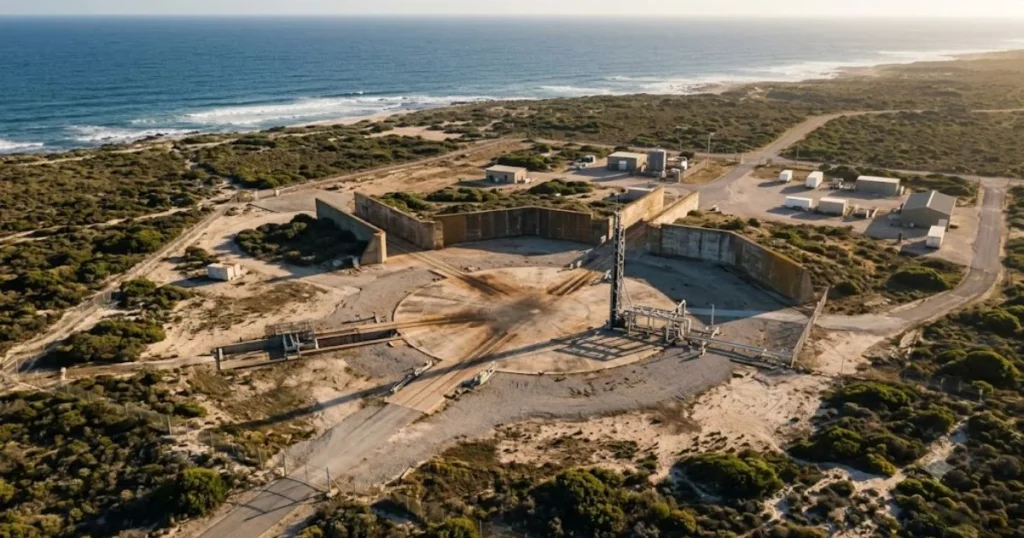
Each notice carries the same opening framing. The FAA proposes amending its commercial space launch and reentry licensing regulations to streamline the licensing process and reduce the regulatory burden on operators and applicants.
The detail differs from notice to notice. The physical containment proposal states that operators using physical containment as a hazard control strategy would not need to develop flight hazard areas under the FAA’s existing flight hazard area analysis requirements. That is a narrow but real relief—it removes an analysis step when the hazard is already physically confined.
The blast effects proposal is similarly shaped. A far-field overpressure blast effects analysis required for license applicants would not need to account for members of the public in hypothetical locations. The word “hypothetical” is doing the work here: the analysis would no longer model people who are not, in fact, there.
The lightning proposal adds an exception for compliance with lightning hazard mitigation requirements, but only for certain licensed launch and reentry operations. The FAA has not extended it across the board, so the applicability test will matter.
The flight safety analysis proposal is the most consequential for engineering teams. It would consolidate the information required for an operator’s flight safety analysis. Consolidation usually means fewer duplicate submissions and one governing reference instead of several overlapping ones.
The digital modernization proposal is procedural rather than analytical. It would allow license and permit applications, and requests for waivers, alternative time frames, and safety element approvals, to be filed through additional electronic methods. For applicants who still work with mixed submission channels, that is a practical change.
Why Five at Once Matters More Than Any One
Publishing five burden-reducing proposals in the same issue of the Federal Register signals priorities. It tells the commercial space industry what the regulator sees as friction and where relief is likely to arrive first.
Look at what is absent. None of these notices relaxes the underlying safety findings or the hazard analysis obligations themselves. They remove duplication, allow better submission channels, and carve out defined exceptions. That pattern—process relief without substantive relaxation—is the same one regulators apply when they try to increase launch cadence without lowering the safety bar.
For compliance teams, the practical consequence is a documentation question. If your license package currently contains a flight hazard area analysis built around physical containment, or a blast effects analysis that models hypothetical public locations, those sections may become candidates for simplification. This is only helpful if you can show what you filed and when.
Impact Matrix
| Role | What the proposals mean now | Immediate next step |
|---|---|---|
| Licence applicant (pre-application) | Possible reduction in analysis scope for containment and blast effects | Flag the affected sections of your draft package pending the final rule |
| License holder (operating) | Exceptions and consolidations may simplify future license modifications | Review whether any current condition or approval would be affected |
| Safety analysis engineering | Flight safety analysis submissions could be restructured | Comment on the consolidation approach — this is where technical input lands |
| Launch site operator | Containment-based hazard control becomes a clearer path | Assess whether your site plan relies on physical containment today |
| Regulatory affairs | Electronic submission channels may widen | Map current submission methods against the proposed alternatives |
| Adjacent AAM / uncrewed operators | Signals how the FAA handles novel approval pathways | Track the outcome as a precedent for risk-based relief |
Compliance Checklist
- List each of the five dockets and assign an internal owner.
- Identify which parts of your license or permit package touch physical containment, blast effects, lightning mitigation or flight safety analysis.
- Confirm whether any current license condition would be affected by a proposed exception.
- Draft comments that cite specific documents, tasks and hours — evidence, not opinion.
- File comments by 4 November 2026 through regulations.gov under the correct docket number.
- Record the docket numbers in your regulatory watch register so the final rules are picked up automatically.
- Do not amend live submissions on the basis of a proposal.
Key Dates
| Date | Event |
|---|---|
| 5 October 2026 | All five NPRMs published (Federal Register Vol. 91, No. 191) |
| 4 November 2026 | Comment deadline for all five notices |
| After the comment period | FAA reviews comments and determines whether to issue final rules |
ARW Take
The headline is not that the FAA wants less paperwork. The headline is that it wants less paperwork in five specific places, published together, with a single comment date — which makes this easy to engage with and easy to miss.
Three points for compliance professionals. First, nothing is in force; the burden reductions arrive only with final rules, so do not restructure an active submission yet. Second, the proposals are asymmetric in value — the flight safety analysis consolidation is worth engineering attention, while the digital submission change is largely administrative. Third, the comment window is short and shared, so internal review needs to happen in the next two weeks rather than by the deadline.
For readers whose interest is airworthiness rather than space licensing, this cluster is still worth tracking. It is the clearest current example of how the FAA structures risk-based relief: keep the safety finding, remove the duplication, allow defined exceptions where the hazard is already controlled. Expect the same pattern in the airworthiness and operations dockets we cover every week.
Sources
- FAA, Simplifying Physical Containment Requirements — FR Doc. 2026-20386, Docket FAA-2026-9934, Notice 26-22, RIN 2120-AM38 (5 October 2026)
- FAA, Digital Modernization for Licensing Electronic Application Submissions — FR Doc. 2026-20387, Docket FAA-2026-9935, Notice 26-25
- FAA, Streamlining Flight Safety Analysis Methodology Means of Compliance — FR Doc. 2026-20388, Docket FAA-2026-9936, Notice 26-23
- FAA, Lightning Hazard Mitigation Burden-Reducing Exception — FR Doc. 2026-20391, Docket FAA-2026-9940, Notice 26-18
- FAA, Overpressure Blast Effects Analysis Burden-Reducing Clarification — FR Doc. 2026-20392, Docket FAA-2026-9941, Notice 26-19
- Federal Register Vol. 91, No. 191, Monday 5 October 2026 — Proposed Rules
FAQ
Do these notices affect aircraft airworthiness rules?
No. They amend commercial space launch and reentry licensing regulations. Aircraft airworthiness requirements are unaffected.
Can I rely on a proposed exception before the final rule?
No. A proposal creates no rights and no relief. Compliance is assessed against the rules in force on the date of the operation.
Do the notices share a comment docket?
No. Each has a separate docket number, and comments must be filed against the correct one.
Will there be a public hearing?
Nothing in the published notices commits the FAA to a hearing. The route offered is written comment through the Federal eRulemaking Portal.
AviationRegWatch publishes regulatory intelligence for aviation compliance professionals. This article is an informational summary of published proposed rules, not legal advice. Verify all requirements against the official Federal Register publications and consult qualified counsel before making licensing or compliance decisions.