
Quick Answers
What does FAA AD 2026-14-03 require for GE GEnx engine operators?
FAA AD 2026-14-03, effective August 21, 2026, requires identifying the preform manufacturing lot number of affected fuel tube hoses on GE GEnx-1B and GEnx-2B engines at the next engine shop visit. If the lot number is 684141 or 677536, the hose must be removed before further flight and replaced with an eligible part.
Which aircraft does FAA AD 2026-14-03 affect?
FAA AD 2026-14-03 applies to GE GEnx-1B engines, which power the Boeing 787 Dreamliner family, and GE GEnx-2B engines, which power the Boeing 747-8 and 747-8F. Applicability is limited to engines with specific fuel tube hose part numbers from preform manufacturing lot numbers 684141 or 677536.
Quick Compliance Summary
| Regulatory body | Federal Aviation Administration (FAA) |
| AD number | 2026-14-03 — Amendment 39-23404 |
| Docket | FAA-2026-2717 |
| Engines affected | Certain GE GEnx-1B and GEnx-2B variants with specific fuel tube hose part numbers from affected manufacturing lots |
| Aircraft powered | Boeing 787 Dreamliner (GEnx-1B) and Boeing 747-8/-8F (GEnx-2B) |
| Issue | Defective fuel tube hose connecting the main fuel-oil heat exchanger — manufacturing lot defect causes cracking and fuel leakage |
| Required action | At next engine shop visit: identify and perform manufacturing lot number. If lot 684141 or 677536 — remove before further flight and replace with an eligible part |
| Compliance deadline | August 21, 2026 — but action required at next engine shop visit, not immediately |
| US engines affected | 13 engines on US registry |
| Source | Federal Register Vol. 91, No. 137, July 17, 2026 — FR Doc 2026-14478 |
Who Should Read This
This update is directly relevant to:
- Continuing Airworthiness Managers (CAMs) for 787 and 747-8 fleets
- Directors of Maintenance
- Engine shop managers at Part 145 organizations with GEnx capability
- MRO Planning Teams scheduling GEnx shop visits
- Spare parts and inventory managers — affected lot numbers must be purged from shelf stock
The US-registered population is small (13 engines). But the GEnx powers two of the most widely operated widebody types globally — the 787 Dreamliner and the 747-8. Non-US operators with GEnx-equipped fleets should confirm compliance against any parallel national authority requirements.
At a Glance
| Item | Details |
|---|---|
| AD Number | 2026-14-03 |
| Amendment | 39-23404 |
| Docket | FAA-2026-2717 |
| JASC Code | 7310 — Engine Fuel Distribution |
| Engine families | GEnx-1B (all variants) and GEnx-2B (GEnx-2B67, 2B67B, 2B67/P) |
| Aircraft | Boeing 787-8, 787-9, 787-10 (GEnx-1B); Boeing 747-8, 747-8F (GEnx-2B) |
| Effective date | August 21, 2026 |
| Trigger | Perform manufacturing lot numbers 684141 or 677536 |
| Compliance trigger | At next engine shop visit after August 21, 2026 |
| Action if affected lot found | Remove before further flight. Replace with eligible part |
| US engines in scope | 13 |
| No reporting required | FAA did not adopt GE SB reporting requirement |
What Changed
The FAA published AD 2026-14-03 on July 17, 2026. It is effective August 21, 2026.
The NPRM was published March 19, 2026. Seven organizations commented. ALPA, Boeing, and United Airlines all supported the NPRM without change.
The triggering event was a fuel imbalance event on a Boeing 787-8 powered by GE GEnx-1B70/P2 engines. A fuel tube hose connecting the main fuel-oil heat exchanger cracked and leaked. Investigation identified the root cause: a suspected manufacturing defect in the hose assembly, associated with specific preform manufacturing lot numbers used to produce multiple fuel tube hose assemblies installed on both GEnx-1B and GEnx-2B engines.
Why It Matters
Fuel leakage from a defective fuel tube hose connecting the fuel-oil heat exchanger creates a fire source in the hot section environment. The consequence if the condition is not addressed: uncontrolled engine fire and damage to the airplane.
This is not a one-off event risk. The defect is associated with specific preform manufacturing lot numbers. Those lot numbers were used across multiple hose assemblies on multiple engines — creating a population-level risk rather than a single aircraft issue.
The FAA’s response is proportionate and non-disruptive. The AD does not require immediate removal of all affected hoses from service. It triggers action at the next engine shop visit. This is reasonable because the defect develops progressively — it is detectable before catastrophic failure — and because the scope of affected US-registered engines is limited (13 engines).
Affected Parts — Know Your Lot Numbers
Applicability is determined by part number AND preform manufacturing lot number — not simply by engine model.
Affected fuel tube hose part numbers:
| Engine | Part name | Part number |
|---|---|---|
| GEnx-1B | FCOC fuel return hose manifold | 2426M07P01 |
| GEnx-1B | FCOC fuel cooling inlet tube hose | 2426M08P01 |
| GEnx-2B | Heat exchanger fuel tube hose | 2477M34P01 |
| GEnx-2B | Heat exchanger inlet fuel tube hose | 2477M35P01 |
A hose with one of these part numbers is only in scope if its preform manufacturing lot number is 684141 or 677536. Hoses with the same part numbers but different lot numbers are not affected.
Required Action
Step 1 — At next engine shop visit after August 21, 2026
Identify the preform manufacturing lot number for each affected hose:
- For GEnx-1B engines: use Figure 1 of GE GEnx-1B Service Bulletin 73-0116 R00, dated November 4, 2025
- For GEnx-2B engines: use Figure 1 of GE GEnx-2B Service Bulletin 73-0108 R00, dated November 4, 2025
Step 2 — If lot 684141 or 677536 is found
Remove the affected hose before further flight. Replace with a part eligible for installation.
A part is eligible for installation if it does not have one of the affected part numbers with preform manufacturing lot number 684141 or 677536.
Shelf stock — critical action for MROs and spare parts teams
The AD is explicit on this point. Parts with affected lot numbers are not airworthy. They must be purged from shelf stock inventory. Installing a shelf-stock hose with an affected lot number would constitute a new violation of the AD — even if an earlier shop visit had already brought the engine into compliance.
If you hold spare GEnx fuel tube hoses with part numbers 2426M07P01, 2426M08P01, 2477M34P01, or 2477M35P01, check the preform lot numbers now.
Credit for prior action
If you already accomplished the removal and replacement required by this AD prior to August 21, 2026, in accordance with the applicable GE Service Bulletin, no further action is required. The AD explicitly states compliance time applies “unless already done.”
Operational Impact
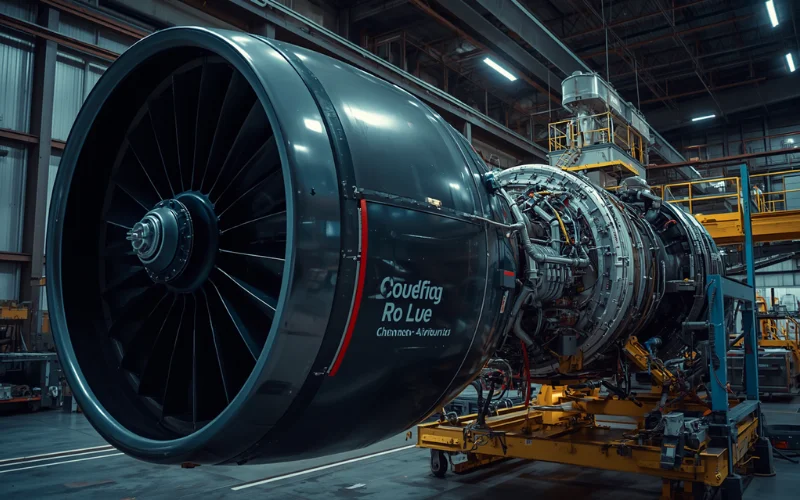
The compliance trigger is the next engine shop visit after August 21, 2026. This is not an aircraft-on-ground (AOG) action for engines currently in service with unknown lot numbers. The AD does not require immediate removal without a shop visit.
Only 13 US-registered engines are in scope. The cost per engine is modest:
| Action | Labor | Parts | Cost per engine |
|---|---|---|---|
| Replace FCOC fuel return hose manifold (GEnx-1B) | $680 | $1,521 | $2,201 |
| Replace FCOC fuel cooling inlet tube hose (GEnx-1B) | $680 | $1,695 | $2,375 |
| Replace heat exchanger fuel tube hose (GEnx-2B) | $680 | $1,090 | $1,770 |
| Replace heat exchanger inlet fuel tube hose (GEnx-2B) | $680 | $1,313 | $1,993 |
Total estimated cost across all 13 US-registered engines: approximately $57,862.
For MRO planning: confirm the GEnx shop visit schedule for all in-scope engines and add the fuel tube hose lot number check as a mandatory work scope item from August 21 onwards.
Key Dates
| Event | Date |
|---|---|
| GE GEnx-1B SB 73-0116 R00 published | November 4, 2025 |
| GE GEnx-2B SB 73-0108 R00 published | November 4, 2025 |
| NPRM published | March 19, 2026 |
| AD 2026-14-03 published | July 17, 2026 |
| AD effective date | August 21, 2026 |
Source Documents
- Federal Register Vol. 91, No. 137, July 17, 2026 — FR Doc 2026-14478
- GE GEnx-1B Service Bulletin 73-0116 R00, November 4, 2025 — contact GE at aviation.fleetsupport@ge.com or (513) 552-3272
- GE GEnx-2B Service Bulletin 73-0108 R00, November 4, 2025 — contact GE at aviation.fleetsupport@ge.com
- AD Docket: regulations.gov, Docket No. FAA-2026-2717
- FAA contact: Itanza Young — itanza.n.young@faa.gov, (206) 482-6306
FAQ
Is this an AOG action or a shop visit action?
Shop visit action. The AD requires identification and removal at the next engine shop visit after August 21, 2026. Engines currently in service are not required to be immediately removed from aircraft. Action is required before further flight only if an affected lot number is found during the shop visit inspection.
How do I identify the preform manufacturing lot number?
Use Figure 1 of the applicable GE Service Bulletin — GEnx-1B SB 73-0116 R00 for GEnx-1B engines, GEnx-2B SB 73-0108 R00 for GEnx-2B engines. Contact GE at aviation.fleetsupport@ge.com for the service bulletins.
Do I need to check shelf stock?
Yes. The AD makes clear that parts with affected lot numbers are not airworthy and must be removed from inventory. Installing an affected shelf-stock hose after the effective date would constitute a violation of 14 CFR 39.7.
I completed the GE Service Bulletin actions before August 21, 2026. Do I still need to comply?
No. The AD states the required actions apply “unless already done.” If you completed the removal and replacement in accordance with the applicable GE Service Bulletin before the AD effective date, no further action is required.
Is reporting to GE required?
No. The FAA explicitly did not adopt the GE Service Bulletin reporting requirement. No reporting to GE is required under this FAA AD.
What is the FCOC fuel return hose manifold?
The fuel-cooled oil cooler (FCOC) is a component that uses fuel to cool engine oil. The fuel return hose manifold returns fuel from the FCOC back into the fuel system. A defect in this hose allows fuel to leak into an area near hot engine components, creating a fire risk.
Related Reading:
- FAA AD 2026-12-07: Boeing 787 MCP Altitude Change — CFIT and Mid-Air Collision Risk Requires MCP Replacement by July 20
- FAA AD 2026-13-14: Boeing 747 Classic and 400 Series — 5G Canadian Airspace Limitations: Complete the Type-Specific AD Series
aviationregwatch.com publishes regulatory intelligence for aviation compliance professionals. This article is an informational summary, not legal or airworthiness advice. Consult your engine manufacturer, CAMO, or legal counsel for compliance decisions.