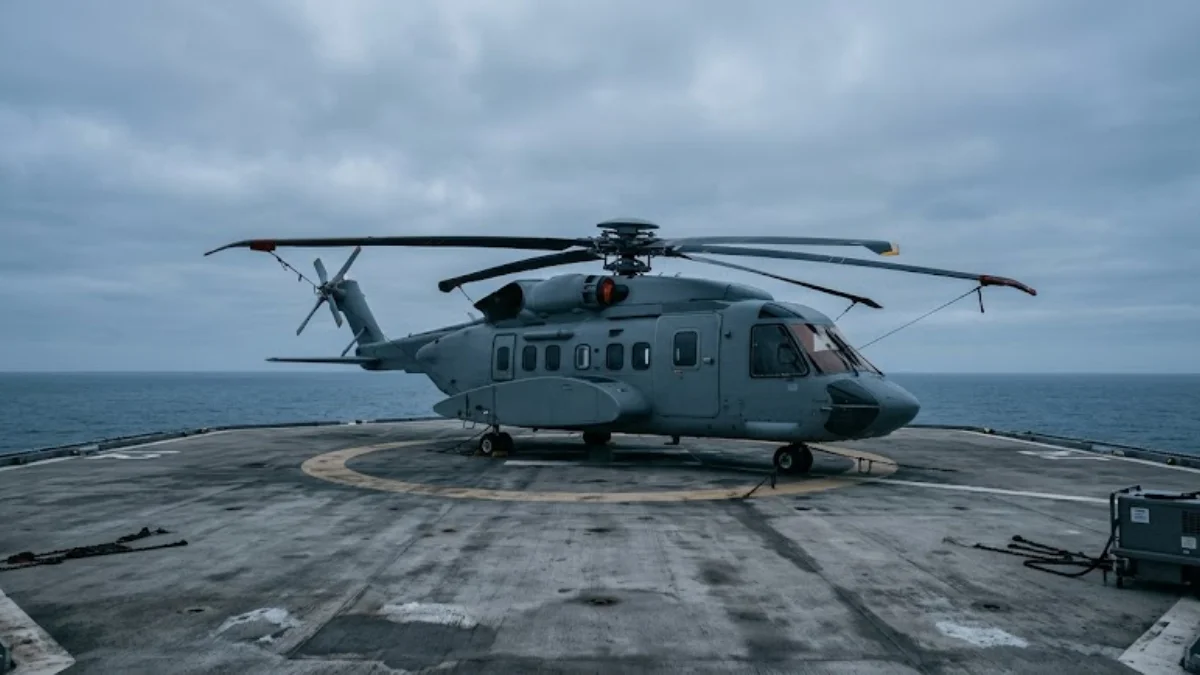
What does the new FAA AD on AS332 cabin doors require?
The FAA AD supersedes two earlier directives and requires modifying either the release system or the jettison system design of each AS332C, AS332C1, AS332L, and AS332L1 cabin lateral sliding plug door, as a terminating action. Effective August 3, 2026, this ends the prior repetitive inspection requirement once complete.
Quick Compliance Summary
| Affected aircraft | Airbus Helicopters AS332C, AS332C1, AS332L, AS332L1 |
| Issue | Cabin lateral sliding plug door failed an emergency jettisoning test. Cause: jettison handle cable interference with cable clamps |
| Required action | Modify the release system or the jettison system design of each cabin lateral sliding plug door |
| Compliance deadline | August 3, 2026 |
| Who should act | Operators, CAMOs, MROs supporting AS332C/C1/L/L1 fleets |
| Source | FAA AD (Docket No. FAA-2026-2720), based on EASA AD 2021-0139R1 |
Who Should Read This
This update is directly relevant to:
- Directors of Maintenance for AS332-series helicopters
- Continuing Airworthiness Managers (CAMs)
- Offshore and SAR helicopter operators
- Part 135 helicopter operators
- Airbus Helicopters Authorized Service Centers
- MRO Planning Teams supporting heavy helicopter fleets
If you operate AS332C, AS332C1, AS332L, or AS332L1 helicopters, this AD replaces two earlier directives you may already be tracking compliance against.
At a Glance
| Item | Details |
|---|---|
| Docket | FAA-2026-2720 |
| ATA / JASC Code | 5200 — Doors |
| Aircraft | AS332C, AS332C1, AS332L, AS332L1 |
| Effective Date | August 3, 2026 |
| Supersedes | AD 2019-09-03 and AD 2021-05-15 |
| Required Action | Modify the door release system, or modify the jettison system design, as a terminating action |
| Unsafe Condition | Door jettison mechanism jamming risk, affecting emergency evacuation |
| Originating Authority | EASA (AD 2021-0139R1, May 10, 2023) |
| Compliance Time | Before August 3, 2026 |
What Changed
This AD supersedes two earlier directives — AD 2019-09-03 and AD 2021-05-15 — both covering the same underlying issue on the same aircraft.
Here’s how the history unfolded. AD 2019-09-03 required a one-time inspection of the door jettisoning mechanism. AD 2021-05-15 followed, requiring repetitive inspections and a choice between two corrective paths: modifying the release system, or modifying the jettison system design.
Since 2021-05-15 was issued, the manufacturer developed a prerequisite modification for certain helicopters. The manufacturer also determined that improved modification instructions were needed, and that the compliance time could be extended.
This new AD consolidates all of that. It requires the modification — either path — as a terminating action. Once completed, the repetitive inspection burden ends.
Why It Matters
The underlying safety issue is serious. During a scheduled test of the door jettisoning mechanism, a failure occurred. Investigation found that the jettison handle cable was interfering with the cable clamps.
A jammed jettison mechanism prevents the cabin lateral sliding plug door from being jettisoned in an emergency. This could obstruct occupant evacuation during an emergency situation.
For helicopters used in offshore, SAR, or other high-risk operating environments, rapid emergency egress capability is not a minor system. This AD addresses a direct life-safety function.
Who Is Affected
This AD applies to Airbus Helicopters Model AS332C, AS332C1, AS332L, and AS332L1 helicopters, certificated in any category, as identified in EASA AD 2021-0139R1.
If your fleet includes any of these models, check your current compliance status against the two prior ADs first. Many operators will already have completed some inspection or modification steps under 2019-09-03 or 2021-05-15. This new AD determines what additional action, if any, remains.
Required Action
Comply with all required actions and compliance times specified in EASA AD 2021-0139R1, except where the FAA’s AD text specifies a difference.
In practice, this means:
- Modify the release system of each cabin lateral sliding plug door, or
- Modify the design of the jettison system of each cabin lateral sliding plug door
Either path serves as a terminating action. Once complete, the aircraft is no longer subject to the repetitive inspection requirements carried over from the earlier ADs.
If your helicopter already underwent the prerequisite modification under the earlier AD regime, confirm with your MRO whether the new, improved modification instructions change what remains to be done.
Operational Impact
This AD has a longer compliance runway than some — effective August 3, 2026, giving operators a reasonable planning window from the AD’s publication.
The practical benefit here is consolidation. Rather than managing ongoing repetitive inspections indefinitely, completing the terminating action under this AD closes out the compliance obligation permanently. For fleet planning purposes, this is worth prioritizing over simply continuing repetitive inspections, since the inspection burden does not go away on its own.
Operators should check with Airbus Helicopters on parts and modification kit availability early. A terminating action modification across the AS332C/C1/L/L1 fleet may create demand on service centers as the August deadline approaches.
Key Dates
| Event | Date |
|---|---|
| EASA AD 2017-0022 issued (original) | February 8, 2017 |
| FAA AD 2019-09-03 issued | May 20, 2019 |
| EASA AD 2019-0064R1 issued | December 19, 2019 |
| FAA AD 2021-05-15 issued | April 2, 2021 |
| EASA AD 2021-0139R1 issued | May 10, 2023 |
| New FAA AD effective date | August 3, 2026 |
Source Documents
- Federal Register — Airworthiness Directives; Airbus Helicopters
- EASA AD 2021-0139R1, dated May 10, 2023
- AD Docket: regulations.gov, Docket No. FAA-2026-2720
FAQ About Airbus Helicopters AS332 door jettison
Does completing the earlier AD (2021-05-15) satisfy this new AD?
Possibly, in part. This AD requires the modification as a terminating action, with improved instructions in some cases. Confirm with your MRO whether work already completed under the earlier AD fully satisfies the new requirement, or whether updated modification instructions apply to your specific helicopter.
What was the actual failure that triggered this AD history?
During a scheduled jettisoning mechanism test, a cabin lateral sliding plug door failed to jettison. The investigation found that the jettison handle cable was interfering with the cable clamps — a mechanical interference issue, not a one-off defect.
Why does this matter for emergency situations specifically?
The cabin lateral sliding plug door is a designated emergency exit pathway. If its jettison mechanism jams, that exit path may not be usable during an emergency evacuation.
Is there a repetitive inspection requirement going forward?
Once the terminating action (the modification) is completed, no. The repetitive inspection requirement from the earlier ADs ends once this AD’s terminating action is accomplished.
aviationregwatch.com publishes regulatory intelligence for aviation compliance professionals. This article is an informational summary, not legal or airworthiness advice. Consult your airworthiness authority or legal counsel for compliance decisions.