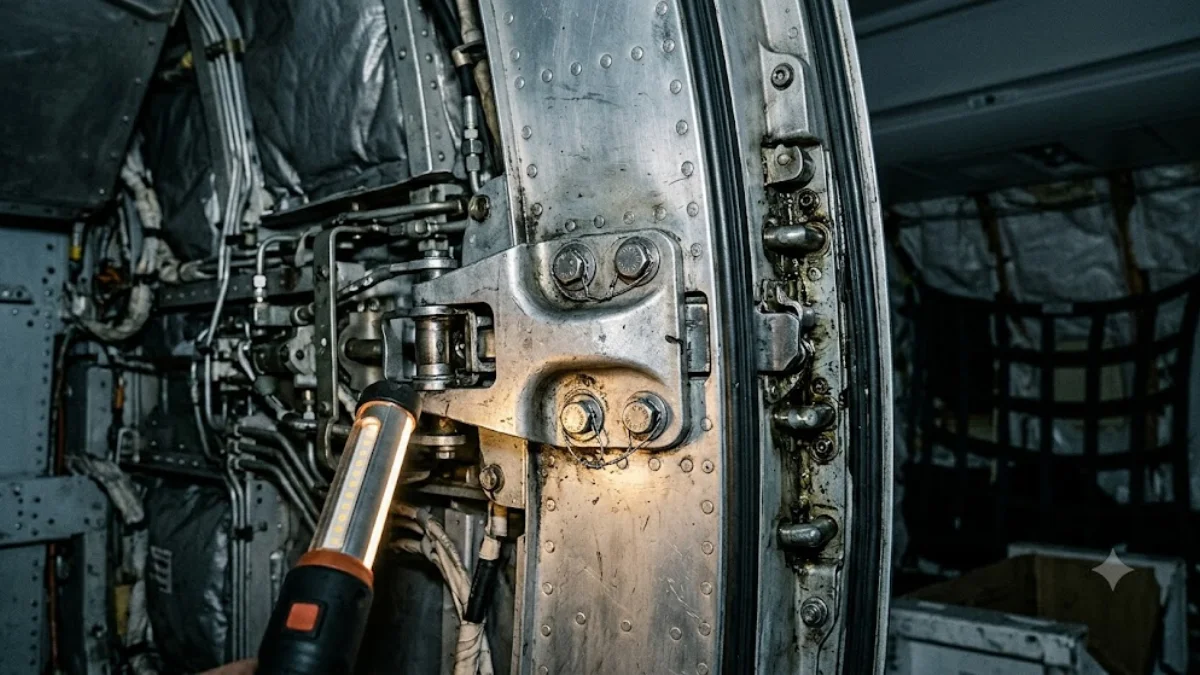
Is the BD-700 baggage door AD the same as the seat frame AD?
No. FAA AD 2026-09-18 addresses baggage door stop fitting bolts on BD-700-1A10 and BD-700-1A11 aircraft, effective June 26, 2026. The separate AD 2026-11-07 addresses seat frame fasteners on BD-700-1A10, -1A11, and -2A12 aircraft, effective July 20, 2026. Both are real, both are current.
Quick Compliance Summary
| Affected aircraft | Bombardier BD-700-1A10, BD-700-1A11 |
| Issue | Bolts securing baggage door stop fittings may have been torqued using the wrong tooling, resulting in improper torque |
| Required action | Torque check of affected bolts. Re-torque, re-install, or replace bolts and nuts as needed |
| Compliance deadline | June 26, 2026 — this AD is already effective |
| Who should act | Operators, CAMOs, MROs supporting BD-700-1A10 and BD-700-1A11 fleets |
| Source | FAA AD 2026-09-18 — Docket No. FAA-2026-2282 |
Who Should Read This
This update is directly relevant to:
- Directors of Maintenance for BD-700-1A10 and BD-700-1A11 aircraft
- Continuing Airworthiness Managers (CAMs)
- Part 135 Operators
- Part 91K Fractional Operators
- Bombardier Authorized Service Centers
- MRO Planning Teams
Already tracking the BD-700 seat frame AD (2026-11-07) from earlier this year? This is a second, separate BD-700 AD. Different issue. Different system. Same aircraft family.
At a Glance
| Item | Details |
|---|---|
| AD Number | 2026-09-18 |
| Amendment | 39-23340 |
| Docket | FAA-2026-2282 |
| ATA Code | 52 — Doors |
| Aircraft | BD-700-1A10, BD-700-1A11 |
| Effective Date | June 26, 2026 (already in effect) |
| Required Action | Torque check, re-torque, re-install, or replace baggage door stop fitting bolts and nuts |
| Unsafe Condition | Improper torque from inappropriate tooling |
| Originating Authority | Transport Canada (AD CF-2025-28, June 10, 2025) |
| Compliance Time | Already due — check fleet status now |
What Changed
The FAA published AD 2026-09-18 in the Federal Register on May 22, 2026. It became effective June 26, 2026.
This AD mirrors Transport Canada AD CF-2025-28, dated June 10, 2025. The FAA reviewed the mandatory continuing airworthiness information (MCAI) and adopted a matching directive for US-registered aircraft.
Note the difference from the earlier BD-700 seat frame AD. That one (2026-11-07) covers seat frame fasteners. This one covers baggage door stop fittings. Two separate issues. Two separate ADs. Same aircraft family.
Why It Matters
Reports indicated that inappropriate tooling was used to torque the bolts securing the baggage door stop fittings. Wrong tooling can produce an improper torque condition — too loose, too tight, or inconsistent.
Here’s the risk. Improperly torqued bolts on a baggage door stop fitting can compromise structural integrity. If a fitting fails, the consequence could be cabin depressurization.
This is not a cosmetic or convenience item. A door structural failure in flight is a serious safety event.
Who Is Affected
This AD applies to Bombardier BD-700-1A10 and BD-700-1A11 airplanes, certificated in any category, as identified in Transport Canada AD CF-2025-28.
| Model Designation | Aircraft Type |
|---|---|
| BD-700-1A10 | Global Express, Global 5000 |
| BD-700-1A11 | Global 6000 |
Note: The BD-700-2A12 (Global 7500) is not included in this particular AD. It was included in the earlier seat frame AD (2026-11-07), but this baggage door AD applies only to the -1A10 and -1A11 models.
Required Action
Operators must perform a torque check of the affected bolts securing the baggage door stop fittings.
Based on the check results:
- Re-torque bolts found to be out of specification but otherwise serviceable
- Re-install bolts and nuts where needed
- Replace affected bolts and nuts where re-torquing or re-installation is not sufficient
This AD took effect June 26, 2026. If your fleet includes affected aircraft, this compliance action should already be scheduled or completed.
Operational Impact
The estimated cost burden, per the FAA’s published cost analysis, is approximately 8 work-hours per aircraft at $85 per hour — roughly $680 per aircraft in labor, with parts replacement costs running higher depending on how many bolts and nuts require replacement, up to approximately $39,420 in the FAA’s published worst-case estimate across the affected fleet.
This is a comparatively quick maintenance action relative to the BD-700 seat frame AD. A torque check and corrective action can typically be folded into a scheduled maintenance visit without major downtime, unless replacement parts are needed and not immediately on hand.
If you operate both -1A10/-1A11 and -2A12 aircraft, track these as two separate compliance items. Don’t assume completing one AD satisfies the other.
Key Dates
| Event | Date |
|---|---|
| Transport Canada AD CF-2025-28 issued | June 10, 2025 |
| NPRM published | February 26, 2026 |
| FAA AD 2026-09-18 published | May 22, 2026 |
| AD effective date/compliance due | June 26, 2026 |
Source Documents
- Federal Register Vol. 91, No. 99, May 22, 2026 — FR Doc 2026-10271
- Transport Canada AD CF-2025-28 (June 10, 2025) — available at tc.canada.ca/en/aviation
Bombardier BD-700 baggage doorstop fitting AD: FAQ
Is this the same AD as the BD-700 seat frame directive?
No. This AD (2026-09-18) addresses baggage door stop fitting bolts. The seat frame AD (2026-11-07) addresses a separate issue involving missing Loctite on seat frame fasteners. Both apply to BD-700 aircraft, but they are different ADs that cover different systems and have different compliance dates.
Does this AD apply to the BD-700-2A12 (Global 7500)?
No. This particular AD applies only to the BD-700-1A10 and BD-700-1A11 models. The Global 7500 (BD-700-2A12) is not included in this AD.
What happens if the torque check finds nothing wrong?
Document the check. Even if no corrective action is required, performing and recording the torque check satisfies the AD’s compliance requirement.
Is this AD already past its compliance date?
Yes. The AD became effective June 26, 2026. If you operate affected aircraft and haven’t completed the torque check, treat it as an immediate priority.
Related Reading:
- Transport Canada Proposes ICAO-Aligned Air Carrier Security Program Regulations — Comment Deadline June 24, 2026
- Transport Canada Proposes Mandatory Remote ID, Community-Based Organization Framework
- Transport Canada: Air Carriers Must File Updated Insurance Proof by June 30, 2026 —
aviationregwatch.com publishes regulatory intelligence for aviation compliance professionals. This article is an informational summary, not legal or airworthiness advice. Consult your airworthiness authority or legal counsel for compliance decisions.