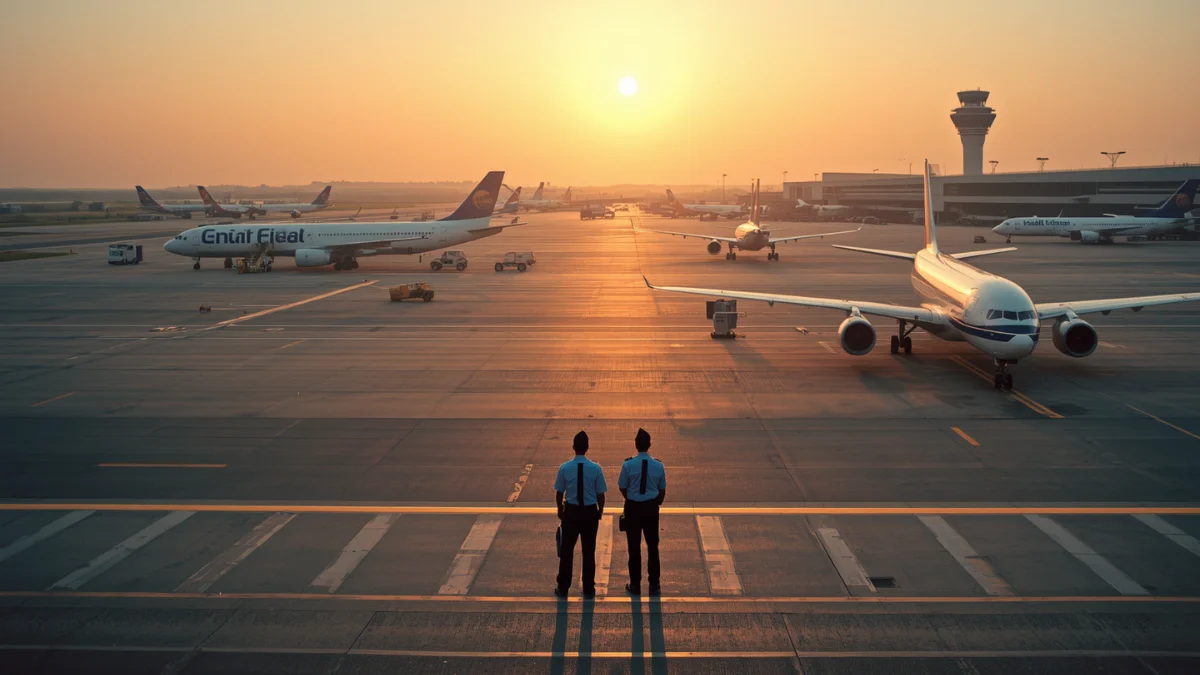
Regulatory Change | DGCA India | Aviation Security Published: May 10, 2026 | Last Updated: June 2026 | Source: DGCA Notification, Rule 13, Aircraft Rules 1937
Quick Summary
India’s DGCA issued a revised notification on May 8, 2026, under Rule 13 of the Aircraft Rules, 1937, tightening and formalizing photography protocols within restricted airport zones at all 163 operational airports.
The notification introduces mandatory compliance requirements for authorized photographers in security hold areas and on the tarmac. Standard passengers remain prohibited from photography in these areas.
The update creates a uniform national standard replacing inconsistent local practices.
Quick Facts
| Item | Details |
|---|---|
| Authority | DGCA — Directorate General of Civil Aviation, India |
| Legal Basis | Rule 13, Aircraft Rules 1937 |
| Notification Date | May 8, 2026 |
| Airports Covered | All 163 operational airports in India |
| Key Restricted Zones | Security hold areas, tarmac sections |
| Standard Passengers | Remain prohibited — no change |
| Authorised Photography | Permitted under new mandatory conditions only |
| Documentation Required | Yes — aerodrome operators must maintain records |
| Applies To | Aerodrome operators, authorised personnel, media, official visitors |
What Changed
The May 8, 2026 notification does not create new prohibited zones — but it formally tightens and standardizes conditions for authorized photography inside restricted areas.
Specific changes under the revised notification:
- Mandatory compliance conditions introduced for individuals permitted to photograph within restricted airport zones
- Aerodrome operators required to maintain formal documentation of all photography authorizations
- Equipment restrictions — photography equipment must not be used for surveillance-adjacent activities
- Uniform national standard replaces previously inconsistent local airport authority practices
- Standard passengers continue to be prohibited from photography in security hold areas and on tarmacs — this existing prohibition is formally reinforced across all 163 airports
- Applies to: security hold areas, tarmac sections, and airside operational areas at all airports including Delhi (IGI), Mumbai (CSIA), Bengaluru (KIAL), Hyderabad (RGIA), Chennai (MAA), and Kolkata (CCU)
Why the Regulation Was Updated
India’s airport network has expanded significantly. With 163 operational airports and several greenfield facilities entering service, the DGCA identified inconsistent application of photography protocols across different facilities.
Three drivers prompted the May 8 notification:
1. Standardization gap. Photography permissions were previously managed at the local airport level, resulting in inconsistencies across the network.
2. Security modernization. The update is part of a broader 2026 aviation security program across India’s civil aviation sector.
3. Network expansion. As new airports come online, a uniform national framework ensures consistent security standards from day one of operations.
Who Is Affected
Aerodrome Operators: Must update internal photography authorization procedures and maintain formal records of all permitted photography activities in restricted zones.
Media Organizations: Entities that previously operated under informal or locally issued photography permissions must obtain formal authorization under the new framework.
Commercial Photographers and Production Companies: Any commercial photography or video production inside restricted zones requires formal authorization under the revised conditions.
Airline and Ground Handler Staff Must be briefed on updated protocols governing photography of aircraft, equipment, and operational areas.
Photography of Official Delegations and VIP Visitors during official airport visits inside restricted zones must comply with the new mandatory conditions — even when accompanied by an escort.
Standard Passengers: No change — photography in security hold areas and on tarmacs remains prohibited.
Compliance Timeline
| Milestone | Date |
|---|---|
| DGCA Notification Issued | May 8, 2026 |
| Effective Across All 163 Airports | Immediately upon notification |
| Aerodrome Documentation Requirement | Ongoing from notification date |
Operational Impact
For Aerodrome Operators, the documentation requirement is the primary new operational burden. Airports must establish or update formal authorization records for all personnel with photography access in restricted zones.
This includes tracking the identity, purpose, date, and equipment used for each authorized photography session.
For Media Organizations, organizations with standing airport access agreements should confirm whether existing authorizations remain valid under the new framework or require reissuance under the revised conditions.
For Aviation Security Teams: Consistent national enforcement replaces local discretion. Security personnel at all 163 airports must receive updated briefings and understand the new mandatory conditions they are responsible for enforcing.
For New Airport Openings: All new airports entering service will operate under the uniform May 8 framework from day one — eliminating the risk of security gaps in photography during early operations.
Industry Response
The DGCA notification was issued as part of a broader civil aviation security package. No formal response from the industry association has been published.
The update is administrative in nature and has not generated adverse comment from aerodrome operators or media organizations.
The notification aligns with India’s broader civil aviation modernization program under the Bharatiya Vayuyan Adhiniyam 2024, which provides the updated legislative framework for DGCA security oversight.
Official Sources
- DGCA Notification — Rule 13, Aircraft Rules 1937 — May 8, 2026 (available at dgca.gov.in)
- Bharatiya Vayuyan Adhiniyam 2024 — Legislative Framework
- Ministry of Civil Aviation, Government of India
Action Steps
Aerodrome operators, media organizations, and affected airport personnel should:
- Aerodrome operators: Review and update internal photography authorization processes to align with May 8 notification requirements; establish formal documentation records for all restricted zone photography activities
- Media and commercial photographers: Confirm existing airport access authorizations remain valid; seek reissuance under new framework conditions if required
- Airlines and ground handlers: Brief relevant staff on updated protocols; update internal procedures governing photography of aircraft and operational areas
- Airport security teams: Update post-security briefing materials; ensure all security personnel understand the mandatory conditions now applicable to authorized photographers
- New airport projects: Incorporate May 8 notification requirements into pre-opening operational procedures and security documentation
Frequently Asked Questions
Can passengers take photos at Indian airports in 2026?
Standard passengers remain prohibited from photography in security hold areas and on airport tarmacs. This prohibition is unchanged and has been reinforced across all 163 airports by the May 8 notification. Photography in public landside areas — check-in halls, departure lounges before security — is generally permitted.
Who can obtain photography authorization under the new rules?
Authorization is available to aerodrome operators, designated official personnel, accredited media organizations, and individuals granted specific permission for defined purposes. All must comply with the mandatory conditions set out in the May 8 notification.
Does the notification change the rules for aviation enthusiasts (spotters)?
Aviation spotters photographing aircraft from public areas outside airport perimeters are not affected. The notification governs photography only inside restricted airport zones — security hold areas and tarmac sections.
What documentation must aerodrome operators maintain?
The notification requires formal records of all photography authorizations in restricted zones, including the photographer’s identity, purpose, date, location, and equipment used.
Does this apply to all Indian airports including smaller regional ones?
Yes. The notification applies to all 163 operational airports in India — not only the major international airports.
Which legislation gives the DGCA authority over airport photography?
The DGCA notification is issued under Rule 13 of the Aircraft Rules, 1937, as updated by the Bharatiya Vayuyan Adhiniyam, 2024.
Related Reading
Editorial Note: This article is based on the DGCA notification issued May 8, 2026 under Rule 13 of the Aircraft Rules 1937 and publicly available reporting. The specific mandatory conditions set out in the notification should be verified directly against the official DGCA publication at dgca.gov.in before compliance decisions are made. Researched and reviewed using official DGCA and Ministry of Civil Aviation sources.