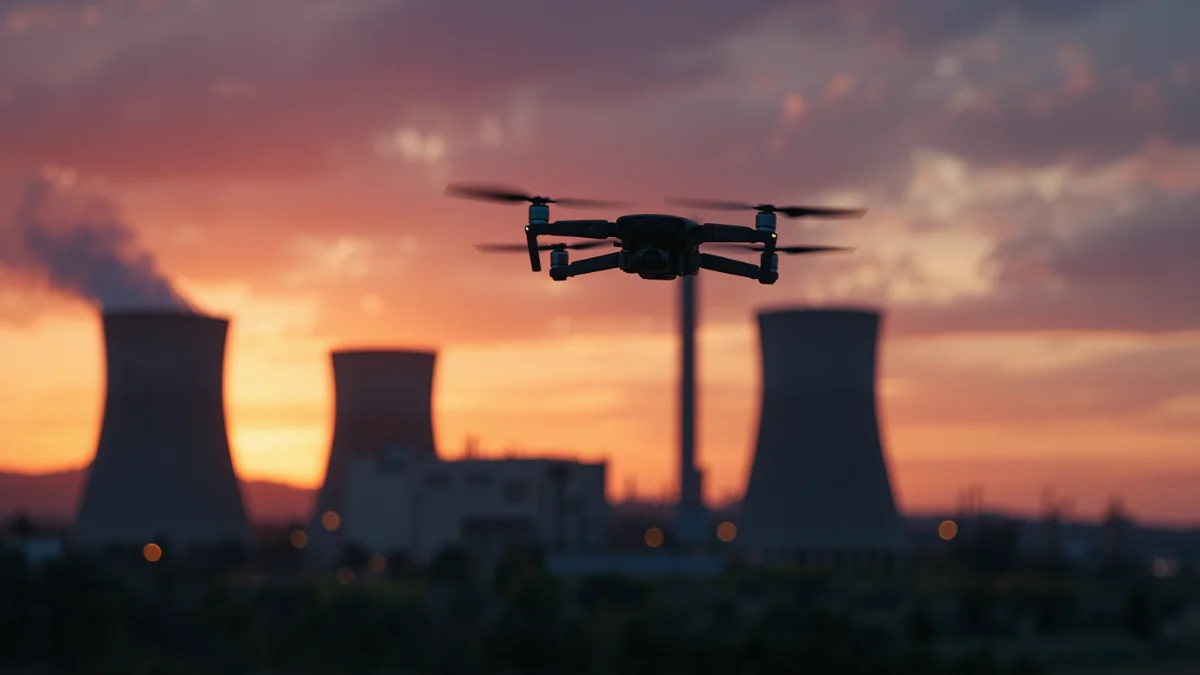
Deadline Alert | FAA UAS Regulation | May 2026
Last Updated: May 9, 2026 | Source: Federal Register, May 6, 2026
Quick Summary
The FAA published a Notice of Proposed Rulemaking (NPRM) on May 6, 2026, that would allow owners and operators of critical infrastructure and sensitive fixed-site facilities to formally apply for drone flight restrictions over their properties.
The proposed rule — nearly a decade overdue — implements Section 2209 of the FAA Extension, Safety, and Security Act of 2016. Public comments are open through July 6, 2026. The rule directly affects critical infrastructure operators, drone commercial operators, and airspace security planners nationwide.
Quick Facts
| Item | Details |
|---|---|
| Authority | Federal Aviation Administration (FAA) |
| Document Type | Notice of Proposed Rulemaking (NPRM) |
| Federal Register Publication | May 6, 2026 |
| Legal Basis | Section 2209, FAA Extension, Safety and Security Act 2016 |
| Public Comment Deadline | July 6, 2026 (60 days) |
| Applies To | Critical infrastructure operators, UAS operators, airspace planners |
| Related Executive Order | EO — Restoring American Airspace Sovereignty, June 6, 2025 |
| Original Congressional Deadline | January 2017 (nearly a decade overdue) |
What Changed
Section 2209 of the 2016 FAA Extension, Safety, and Security Act directed the FAA to establish a process that allows operators of critical infrastructure to petition for drone flight restrictions in close proximity to their sites. Congress set a January 2017 deadline. The FAA did not publish the required rulemaking for nearly nine years.
The May 6, 2026, NPRM is the first formal step toward fulfilling that mandate. The proposed rule would:
- Establish a formal application process for fixed-site facility owners to request UAS flight restrictions
- Define eligible “high-risk fixed-site facilities” covered by the rule
- Create a review and approval mechanism within the FAA for evaluating restriction requests
- Set parameters for the geographic scope and altitude of applicable restrictions
- Align with President Trump’s June 2025 Executive Order on Restoring American Airspace Sovereignty, which directed the FAA to promulgate a final rule “as soon as practicable.”
This is a proposed rule only. No restrictions are in force until the rulemaking process is complete and a final rule is published.
Why the Regulation Was Proposed
Escalating drone incursions near critical infrastructure. The commercial drone sector has grown rapidly over the past decade, leading to an increasing number of documented UAS incursions near power plants, water treatment facilities, refineries, stadiums, and other sensitive sites. Existing regulations provide limited formal mechanisms for site operators to secure airspace above their facilities.
Nearly a decade of regulatory delay. Congress mandated this rulemaking in 2016 with a January 2017 compliance deadline. Multiple administrations failed to advance it. The current administration’s June 2025 Executive Order on Airspace Sovereignty forced the issue, directing the FAA Administrator to promptly submit an NPRM to the Office of Management and Budget.
National security alignment. The FCC has simultaneously taken steps to regulate UAS, reflecting a cross-agency recognition that drone airspace security requires coordinated federal action.
ICAO and international alignment. As global aviation bodies develop frameworks for UAS integration, the US faces pressure to establish clear domestic rules that harmonize with international standards.
Who Is Affected
Critical Infrastructure Operators: Power plants, water facilities, chemical plants, refineries, stadiums, data centers, and other high-risk fixed-site facilities would be able to formally apply for restrictions on drone flights. This is a significant new tool for physical security planning.
Commercial UAS Operators Drone operators — including survey, inspection, media, and delivery companies — must monitor the outcome of this rulemaking closely. New restriction zones could affect flight planning, route authorization, and LAANC (Low Altitude Authorization and Notification Capability) approvals.
Recreational Drone Flyers. Approved restriction zones would apply to all UAS operations, including recreational flights. Pilots using apps like B4UFLY would see updated restriction data if the rule is finalised.
State and Local Governments: State laws may independently restrict UAS operations over critical infrastructure. The federal rule will interact with — and in some cases preempt — existing state-level restrictions.
Security and Compliance Teams Facility security officers at affected infrastructure sites will need to understand the application process, documentation requirements, and ongoing compliance obligations under any finalized rule.
UAS Integration Stakeholders UTM (UAS Traffic Management) developers, remote ID technology providers, and airspace data services will need to incorporate new restriction zone data into their systems.
Compliance and Timeline
| Milestone | Date |
|---|---|
| Original Congressional Mandate | FAA Extension, Safety and Security Act — 2016 |
| Original Compliance Deadline (missed) | January 2017 |
| Executive Order: Restoring Airspace Sovereignty | June 6, 2025 |
| NPRM Published in Federal Register | May 6, 2026 |
| Public Comment Period Opens | May 6, 2026 |
| Public Comment Deadline | July 6, 2026 |
| Final Rule (estimated) | TBD — dependent on comment review |
| Restrictions Take Effect | After final rule publication and effective date |
Operational Impact Analysis
For Infrastructure Operators, the most immediate task is preparing for the comment period: operators who wish to shape the rule’s scope — including what qualifies as “high-risk,” how restrictions are geographically defined, and how the application process works — should submit formal comments by July 6, 2026.
For Commercial Drone Operators, new restricted zones will add complexity to flight-planning workflows. Operators using LAANC, DroneZone, or third-party UTM platforms should expect system updates if the rule is finalized. Operators working near power plants, refineries, or large event venues face the greatest exposure.
For UAS Software and Platform Developers, approved restriction zones must be integrated into airspace awareness tools. Developers should begin technical planning for ingesting, displaying, and enforcing new restriction data.
For Legal and Compliance Teams The rule creates a formal federal process, but state-level UAS restriction laws remain in effect. The interaction between federal and state restrictions will require careful legal mapping, particularly for operators working across multiple jurisdictions.
Industry Response
The commercial drone industry has broadly welcomed the rulemaking as long overdue, while raising concerns about the breadth of the “high-risk facility” definition and the potential for restriction zones to become so widespread that they materially impair commercial UAS operations.
Critical infrastructure sectors — including energy, water, and transportation — have long advocated for formal airspace protection mechanisms and are expected to submit substantial public comments supporting strong restriction authorities.
The Small Business Administration’s Office of Advocacy published a summary of the NPRM, noting its potential impact on small UAS commercial operators and flagging the need for clear, proportionate boundaries for restrictions.
The FCC has taken parallel steps on UAS regulation under the national security framework established by the 2025 Airspace Sovereignty EO, signalling coordinated federal intent.
Official Sources
- Federal Register NPRM — May 6, 2026: Designation — Restrict the Operation of Unmanned Aircraft in Close Proximity to a Fixed Site Facility
- FAA Press Release — May 6, 2026: Restrictions Support President Trump’s Executive Order on Restoring Airspace Sovereignty
- SBA Office of Advocacy NPRM Summary
- Section 2209, FAA Extension, Safety, and Security Act of 2016
- Executive Order — Restoring American Airspace Sovereignty, June 6, 2025
Action Steps
Infrastructure operators, drone operators, and affected stakeholders should:
- Read the full NPRM text in the Federal Register (published May 6, 2026)
- Prepare and submit formal public comments to the FAA by July 6, 2026 — this is the primary opportunity to shape the final rule
- Infrastructure security teams should document existing drone incursion incidents to support restriction applications once the process opens
- Commercial UAS operators should assess current route portfolios for proximity to likely high-risk facility categories
- Legal teams should map current state-level drone restriction laws against the proposed federal framework
- UAS platform developers should begin scoping system updates for new restriction zone data ingestion
Frequently Asked Questions
What is the FAA’s Section 2209 NPRM?
It is a proposed rule that would create a formal process for critical infrastructure operators to apply to the FAA for drone flight restrictions above their facilities. It implements a 2016 Congressional mandate that went unacted upon for nearly a decade.
When is the public comment deadline?
July 6, 2026. Comments can be submitted through the federal rulemaking portal at regulations.gov.
Are drone restrictions already in place under this rule?
No. This is a proposed rule only. No new restrictions will take effect until the FAA publishes a final rule following the public comment review process.
Who can apply for a restriction under the proposed rule?
Owners and operators of designated high-risk fixed-site facilities. The NPRM defines eligible facility types, which are expected to include power generation, water treatment, chemical processing, and other critical infrastructure categories.
Will this affect recreational drone flying?
Yes, if restrictions are approved over a facility near your regular flying area. Recreational flyers will see updated restriction zones in tools like B4UFLY.
What happens after the comment period closes?
The FAA will review all submitted comments, issue a final rule, and set an effective date. The timeline for a final rule has not been specified.
Does this rule replace existing UAS no-fly zones?
No. Existing restrictions — including those around airports, national security sensitive areas, and temporary flight restrictions (TFRs) — remain in place. This rule adds a new category of facility-specific restrictions.
Can states still impose their own drone restrictions on top of this?
Potentially, but federal preemption questions are complex. Operators should seek legal guidance on how state and federal restrictions interact in their operating jurisdictions.
Related Updates
- FAA Launches Contract Tower Pilot Program — May 2026
- FAA SAF Grand Challenge 2030: Production on Track, But Policy Uncertainty Threatens the Final Mile
- CORSIA Phase 2 Starts January 2027: What US Airlines Must Do Now to Comply
- Securing America’s Fuels Act: Senate Moves to Reinstate 45Z SAF Bonus Credit Through 2033
Editorial Note: This article is based on the FAA’s NPRM published in the Federal Register on May 6, 2026, the SBA Office of Advocacy summary, and official FAA press releases. The NPRM is a proposed rule only — no restrictions are currently in force under this rulemaking. All operators should consult the full NPRM text and seek legal advice before making compliance decisions.
Researched and reviewed using official aviation regulatory sources and operational compliance documentation.