
AIRWORTHINESS · FINAL RULE · GA & TRAINING FLEET
Several Diamond DA 40s lost a passenger door in flight. The fix ranges from an AFM revision any private pilot can accomplish through inspections and force measurements to on-condition part replacements. Effective 7 December 2026.
FAA AD 2026-22-06 · FR Doc. 2026-22310Effective 7 December 2026 987 US-registered airplanes
Quick Answers
| Which airplanes are affected? | All Diamond Aircraft DA 40, DA 40 F, and DA 40 NG airplanes — 987 on the US register. |
|---|---|
| What happened? | Several reports of passenger door separation during flight. Diamond attributed some instances to the door not being properly latched, followed by attempts to latch it in flight. For the remainder, no definitive root cause was found. |
| What is the risk? | Door separation could damage the airplane structure, cause loss of control, and injure people on the ground. |
| What must owners do? | Revise the AFM, inspect the door latching and safety-hook systems, measure the door-handle actuation force, install placards, and replace worn parts on condition. |
| When? | Within 100 hours time-in-service or 100 days after the AD’s effective date, whichever comes first. |
| Can a pilot do the AFM revision? | Yes—the AD allows the owner/operator with at least a private pilot certificate to complete the AFM revision and log it in the maintenance records. |
| What does it cost? | $85 for the AFM revision, $331 for the initial inspection, and $85 per repetitive inspection. On-condition replacements run from $251 to $824. |
Quick Compliance Summary
- The AFM revision comes first — and it is the safety-critical part. The flight crew receives new operating limitations, emergency procedures, and normal procedures within 100 hours TIS or 100 days.
- A private pilot can complete the paperwork. The AD explicitly permits the owner to accomplish the AFM revision, logged under 14 CFR 43.9(a) and 91.417.
- The inspection depth depends on total time. Airplanes under 100 hours total TIS get a shorter initial inspection; higher-time airplanes get the full component list plus a handle-force measurement.
- Book the on-condition parts early. Gas springs, hook assemblies, retaining blocks, guide blocks and sealant are the findings-driven replacements — the FAA prices each.
- Newer serial numbers are not exempt. Commenters asked to exclude airplanes with a secondary safety latch. The FAA refused: the red safety hook was never designed to hold the door closed during takeoff.
- This started in Canada. The rule adopts Transport Canada AD CF-2025-30 — Canadian-registered DA 40s have lived with this since June 2025.
Who Should Read This
Essential: DA 40 owners and flight schools, fixed-base operators running DA 40 fleets for rental and training, CAMOs and maintenance providers on the type.
Important: Flight instructors (the emergency procedures land in the AFM you brief from), lessors with DA 40 assets, and aviation insurers writing GA training fleets.
At a Glance
| Element | Detail |
|---|---|
| Rule | AD 2026-22-06 — final rule, 14 CFR Part 39 |
| Identifiers | FR Doc. 2026-22310 · Docket FAA-2026-4633 · Project MCAI-2025-01173-A · Amendment 39-23508 |
| Publication | Federal Register Vol. 91, No. 210, pages 68873–68876, 2 November 2026 |
| Effective | 7 December 2026 |
| Applicability | All Diamond DA 40, DA 40 F, DA 40 NG |
| Origin | Transport Canada AD CF-2025-30, dated June 23, 2025 (the MCAI) |
| Incorporated documents | Diamond MSB 40-103/MSB F4-042/MSB D4-114/MSB 40NG-084 REV. 2 and Work Instruction WI-MSB 40-103/WI-MSB F4-042/WI-MSB D4-114/WI-MSB 40NG-084 REV. 2, both dated June 5, 2025 |
| Core deadline | 100 hours TIS or 100 days after the effective date, whichever comes first |
| US fleet cost | $83,895 (AFM revisions) + $326,697 (initial inspections) + $83,895 per repetitive-inspection cycle |
What Happened
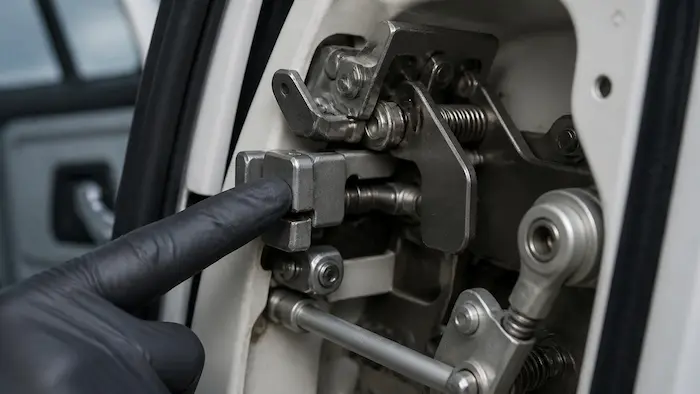
The reports that triggered this AD describe a failure no pilot wants: a passenger door separating from the aircraft in flight. Transport Canada acted first, issuing AD CF-2025-30 on June 23, 2025. The manufacturer’s analysis is candid about what it knows and doesn’t know. Diamond attributed certain instances to the passenger door not being properly latched, and to subsequent attempts to latch the door in flight. For the remaining occurrences, it could not find a definitive root cause.
That admission shapes the whole rule. Where the cause is known, the fix is procedural — latch discipline, and procedures for a door that comes open. Where it is not, the fix is hardware assurance: inspecting every component that keeps the door on, measuring the force it takes to operate the handle, and replacing anything worn on condition.
The FAA proposed the rule on May 13, 2026, and finalised it on November 2, 2026. The unsafe-condition language is stark for a light aircraft: damage to the airplane structure, loss of control of the airplane, and injury to persons on the ground.
What the AD Requires
The rule works in three tiers, all inside a 100-hour/100-day window from the effective date.
Tier one — the AFM revision. Every affected airplane gets the flight-manual update: revised operating limitations, emergency procedures, and normal operating procedures. Notably, the AD lets the owner or pilot—private certificate or better—complete this revision personally and log it, rather than routing it through a maintenance provider.
Tier two — the inspection, scaled by total time. Airplanes with less than 100 hours total TIS get the initial inspection of the safety hook, latching bolts, and front and rear door guide blocks, plus placards. Airplanes at or above 100 hours get the full list: canopy and passenger door warning light, carbon hinges, tension spring, retaining block, safety hook push button, latching mechanism spring, gas spring, door frame — and a measurement of the passenger door handle actuation force.
Tier three — on-condition replacement. Findings drive replacements: gas spring, hook assembly, retaining block, door guide blocks, door sealant. The FAA prices each — the hook assembly is the most expensive at $824 including 4 work-hours.
Repetitive inspections follow the initial one at $85 per inspection. All of it runs off the Diamond Work Instruction and Mandatory Service Bulletin, both REV. 2, dated June 5, 2025.
The Comment the FAA Rejected — and Why It Matters
Three of the four commenters made the same request: exclude newer serial-numbered airplanes. Their argument was reasonable — the unsafe condition traced to early-generation door locking architectures, and newer airplanes carry a secondary safety latch that “completely eliminates” the condition. Forcing those airplanes through the AD, they said, imposes unnecessary maintenance.
The FAA refused, on a detail worth quoting to every DA 40 pilot. Diamond told the agency there are two door-handle configurations, older and newer, and both include a red safety hook. But the red safety hook was not designed to hold the door closed during takeoff. It does not eliminate the unsafe condition, whatever the latch architecture around it.
The practical lesson cuts both ways. For owners, it means no serial-number escape hatch: every DA 40 in the US fleet does the inspection. For pilots, it means the red hook on the door is a last-resort device, not a latching backup — the AD’s AFM procedures are the operative protection.
Impact Matrix
| Role | What the AD means for you | Immediate next step |
|---|---|---|
| Owner / private pilot | AFM revision can be self-accomplished and logged | Order the temporary revision and complete it on day one |
| Flight school / FBO | Fleet-wide inspections plus repetitive checks per aircraft | Build the 100-day compliance plan into the training schedule |
| Maintenance provider | Full component inspection and handle-force measurement on higher-time airframes | Obtain the Work Instruction REV. 2 and stock likely replacements |
| Parts / stores | On-condition parts: gas spring, hook assembly, blocks, sealant | Pre-position gas springs and hook assemblies — the two most common findings |
| Chief flight instructor | New AFM limitations and emergency procedures for an open door | Update the training syllabus and checkride briefing material |
| Lessors / insurers | Compliance status transfers with the airframe | Request AD evidence at renewal or redelivery |
Operator Checklist

- Confirm each DA 40’s position: total hours TIS at the effective date, and the applicable AFM temporary revision.
- Accomplish the AFM revision within 100 hours TIS / 100 days — owners may self-accomplish and log it.
- Schedule the initial inspection at the correct depth for the airplane’s total time.
- Measure the passenger door handle actuation force on higher-time airframes.
- Install the placards required by the Work Instruction.
- Stock the on-condition parts: gas spring, hook assembly, retaining block, door guide blocks, sealant.
- Set up the repetitive inspection interval after the initial inspection.
- Brief all instructors on the new emergency procedures for door events.
- Record AD 2026-22-06 in the compliance register with the December 7 effective date.
Key Dates
| Date | Event |
|---|---|
| June 5, 2025 | Diamond MSB and Work Instruction REV. 2 issued |
| June 23, 2025 | Transport Canada AD CF-2025-30 — the original directive |
| May 13, 2026 | FAA NPRM published (91 FR 26952) |
| November 2, 2026 | Final rule published (FR Doc. 2026-22310) |
| December 7, 2026 | AD effective — the 100-hour/100-day window starts here |
ARW Take
A door coming off in flight is a visceral failure mode, and the regulator’s response matches it. But read the rule closely, and the real story is the manufacturer’s honesty: Diamond couldn’t find a definitive root cause for every occurrence, so instead of pretending otherwise, the AD wraps the fleet in layers—procedures, inspections, measurements, and hardware—until the data shows which layer matters.
Three practical points. First, the timeline is generous for a GA fleet but not free: 100 days lands in mid-March for the last airplanes to comply, and flight schools should not leave the AFM revision to the back of the queue — it is the piece that protects crews from day one. Second, the FAA’s rejection of the newer-serial-number carve-out is the most instructive paragraph in the rule: a device present in the cockpit philosophy but not designed for the job does not buy relief. Expect the same logic in future GA directives. Third, the cost curve is normal for a parts-driven AD — the inspections are cheap, the findings are not. Schools should treat the on-condition parts list as a shopping list, not a surprise.
Canadian readers will recognise all of this — the type has carried CF-2025-30 for sixteen months. The FAA’s adoption brings the US fleet onto the same page, and operators running aircraft on both registers finally have one compliance picture.
Sources
- FAA Airworthiness Directives; Diamond Aircraft Industries Inc. Airplanes — AD 2026-22-06, FR Doc. 2026-22310, 91 FR 68873 (November 2, 2026) — federalregister.gov
- Transport Canada AD CF-2025-30, dated June 23, 2025 (MCAI)
- FAA NPRM, 91 FR 26952 (May 13, 2026)
- Diamond Aircraft MSB 40-103/MSB F4-042/MSB D4-114/MSB 40NG-084 REV. 2 and Work Instruction, dated June 5, 2025
FAQ
My DA 40 NG has the newer door handle. Am I exempt?
No. The FAA considered exactly this argument and rejected it: both handle configurations include the red safety hook, and that hook was not designed to hold the door closed during takeoff. All DA 40 variants comply.
Can I fly before the inspection is done?
Yes, within the compliance window — the AD sets 100 hours TIS or 100 days from the effective date, not a before-further-flight standdown. Accomplish the AFM revision first; it is the crew-facing protection.
Does the AD cover the DA 42?
No. The applicability names only DA 40, DA 40 F, and DA 40 NG. Other Diamond models are not covered by this rule.
What if the handle-force measurement is out of limits?
Follow the Work Instruction’s disposition. The on-condition list — gas spring, hook assembly, retaining block, guide blocks, sealant — exists precisely for that result, and the FAA has priced each replacement.
Related Posts
- FAA Proposes Fleet-Wide CFM56-7B Fan Blade Inspection After In-Flight Separation
- FAA AD 2026-20-14: 737NG Stabilizer Freeplay Checks Explained
- FAA AD 2026-20-11: Trent 700 LPC Blade Replacement Rules
AviationRegWatch publishes regulatory intelligence for aviation compliance professionals. This article is an informational summary of a published final rule, not legal or airworthiness advice. Always verify requirements against the official Federal Register text and the incorporated Diamond documents, and consult your maintenance provider or the FAA before making compliance decisions. Spotted an error or an outdated detail? Let us know, and we will verify and correct it.