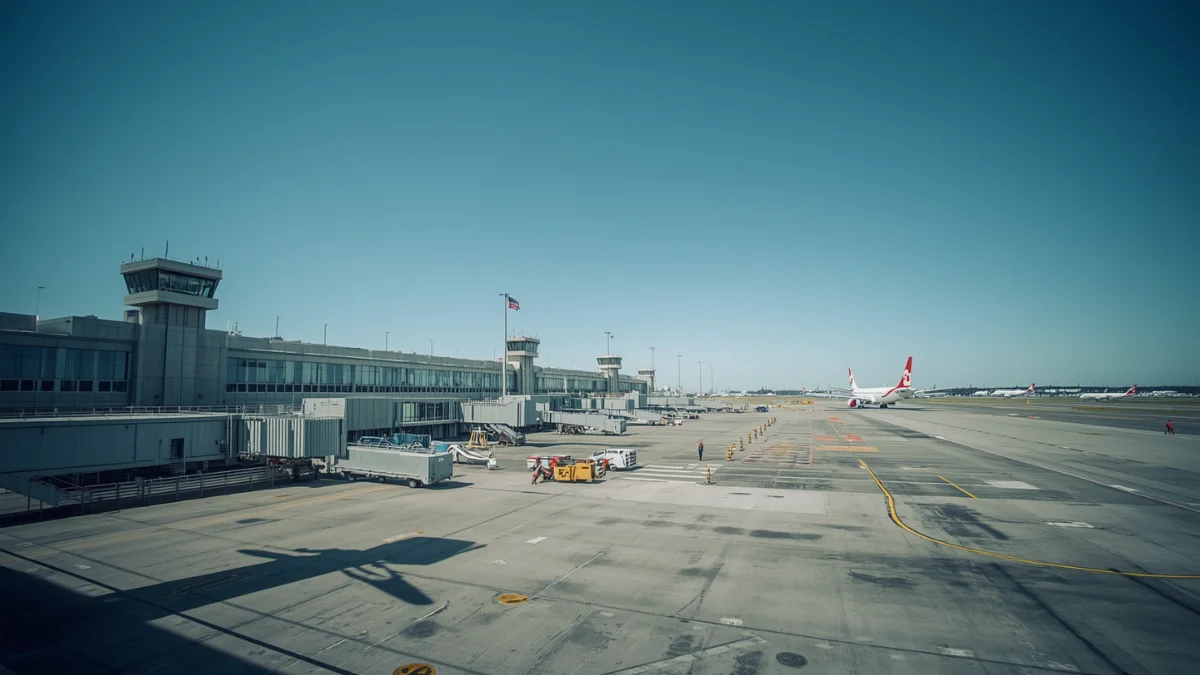
Compliance Alert | Transport Canada | Aviation Security Published: May 5, 2026 | Last Updated: June 2026 | Source: Canada Gazette Part I, April 25, 2026; CBAA Government & Regulatory Affairs Update, May 2026
Quick Summary
On April 25, 2026, the Government of Canada published proposed amendments to the Canadian Aviation Security Regulations in the Canada Gazette, Part I, introducing a formal requirement for certain categories of air carriers operating international flights to establish, implement, and maintain a Security Program for Air Carriers (SPAC).
The proposal is a direct response to ICAO USOAP audit findings and aligns Canadian regulations with ICAO Annex 17 security standards 3.3.1 and 3.3.2. The public comment period closes on June 24, 2026 at 11:59 EDT — falling within this reporting window.
Quick Facts
| Item | Details |
|---|---|
| Authority | Transport Canada |
| Published | Canada Gazette, Part I — April 25, 2026 |
| Comment Deadline | June 24, 2026 at 11:59 EDT |
| ICAO Basis | ICAO Annex 17, Standards 3.3.1 and 3.3.2 |
| Regulatory Trigger | Post-ICAO USOAP audit corrective action |
| Applies To | Carriers holding Part VII Air Operator Certificates operating international flights |
| Core Requirement | Establish, implement, and maintain a formal Security Programme for Air Carriers (SPAC) |
| Programme Elements | Unauthorized access prevention, threat response, risk assessments, audits, training |
What Changed
Currently, Canadian aviation security regulations do not explicitly require all international air carriers to maintain a comprehensive, documented Security Program for Air Carriers (SPAC) meeting ICAO Annex 17 standards.
The proposed amendments would:
- Require qualifying air carriers operating international flights to establish, implement, and maintain a formal SPAC
- Define SPAC content requirements — measures to prevent unauthorized access to aircraft, procedures to respond to security threats and incidents, documented risk assessments, audit activities, and security training requirements
- Clarify existing regulatory provisions — tighten ambiguous language in current security regulations to improve consistent application
- Align with ICAO Annex 17 — specifically standards 3.3.1 and 3.3.2 governing security programs for air carriers
- Address ICAO audit findings — the proposal is an explicit post-USOAP corrective action to close regulatory gaps identified in ICAO’s safety and security oversight audits of Canada
Why the Regulation Was Proposed
ICAO USOAP Audit Findings: Canada underwent an ICAO Universal Security Audit Program review. The audit identified gaps between existing Canadian Aviation Security Regulations and ICAO Annex 17 requirements for air carrier security programs. The proposed amendment is the regulatory correction action.
International Harmonization: Similar security program requirements for air carriers, based on ICAO standards, are required by many other countries and by IATA members. Canada’s alignment reduces friction for Canadian carriers operating internationally and for foreign carriers serving Canadian airports.
Transport Canada ICAO Validation Mission Preparation: Transport Canada is preparing for an upcoming ICAO Coordinated Validation Mission — a follow-up to the USOAP audit to assess progress on corrective actions. Finalizing this regulation is a direct element of demonstrating progress.
Who Is Affected
Airlines Holding Canadian Part VII Air Operator Certificates Any airline holding a Part VII AOC and operating international flights is directly in scope. This covers major Canadian carriers (Air Canada, WestJet, Air Transat) and regional operators with international route authority.
Foreign Carriers Operating International Flights to Canada: Depending on the final scope of the regulation, some provisions may apply to foreign carriers operating international services to and from Canadian airports.
Aviation Security Officers and Compliance Teams: Qualifying carriers must develop, document, and implement a formal SPAC meeting the prescribed content requirements. This is a compliance program management obligation, not simply a procedural update.
Training Organizations and Ground Handlers: Security training requirements for airline personnel and contractors may be affected — the SPAC must address training for all personnel with security-relevant roles.
Compliance Timeline
| Milestone | Date |
|---|---|
| Proposed regulations published — Canada Gazette Part I | April 25, 2026 |
| Public comment period opens | April 25, 2026 |
| Public comment deadline | June 24, 2026 at 11:59 EDT |
| Final regulations published — Canada Gazette Part II (estimated) | 2026–2027 |
| Compliance deadline for carriers | To be determined upon final publication |
Operational Impact
SPAC Development: Carriers without a formally documented SPAC meeting ICAO Annex 17 standards must develop one. This involves security risk assessment, documented procedures for access control and threat response, audit scheduling, and training program development.
Staff Training Requirements: The proposed SPAC requirement includes mandatory security training for personnel with relevant roles — airlines must assess current training programs against the proposed requirements and identify gaps.
Audit and Documentation The SPAC must include audit activities — carriers will need to establish a security compliance audit schedule and maintain records demonstrating ongoing SPAC implementation.
Regulatory Timeline Uncertainty: The regulation is currently in the proposed stage. Final regulations in the Canada Gazette, Part II, are expected in 2026 or 2027, followed by a compliance transition period. Carriers should begin SPAC gap assessments now rather than waiting for final publication.
Official Sources
- Canada Gazette Part I — Regulations Amending the Canadian Aviation Security Regulations, April 25, 2026
- CBAA Government & Regulatory Affairs Update — May 2026
- ICAO Annex 17 — Security: Safeguarding International Civil Aviation Against Acts of Unlawful Interference, Standards 3.3.1 and 3.3.2
- Transport Canada — Forward Regulatory Plan: Aviation Initiatives
Action Steps
Airlines and aviation security teams should:
- Submit public comments by June 24, 2026 — carriers with views on the proposed SPAC requirements, scope, or implementation timeline should submit formal comments through the Canada Gazette consultation process
- Conduct a SPAC gap assessment — compare current security program documentation against the proposed ICAO Annex 17-aligned requirements; identify gaps in risk assessment, access control, threat response, audit, and training
- Engage Transport Canada directly — carriers with complex international operations should seek regulatory interpretation meetings during the consultation period
- Begin SPAC development — do not wait for final regulations; developing a compliant SPAC now positions carriers for smooth compliance once the regulation is finalized
- Brief security and compliance teams — ensure awareness of the proposed requirements and the comment deadline
Frequently Asked Questions
What is a Security Program for Air Carriers (SPAC)?
SPAC is a formal, documented program that sets out the security measures, procedures, and responsibilities applicable to an air carrier’s operations. It typically covers aircraft access control, threat and incident response, security risk assessment, audit activities, and personnel training.
What is a Security Program for Air Carriers (SPAC)?
SPAC is a formal, documented program that sets out the security measures, procedures, and responsibilities applicable to an air carrier’s operations. It typically covers aircraft access control, threat and incident response, security risk assessment, audit activities, and personnel training.
Why is Transport Canada proposing this now?
The proposal is a direct post-ICAO USOAP (Universal Security Audit Program) corrective action. ICAO’s audit identified gaps between Canada’s existing aviation security regulations and ICAO Annex 17 standards. The amendment addresses those gaps.
What is ICAO Annex 17?
ICAO Annex 17 — Security: Safeguarding International Civil Aviation Against Acts of Unlawful Interference — sets international standards and recommended practices for aviation security. Standards 3.3.1 and 3.3.2 specifically address security programs for air carriers.
Which carriers must comply?
Carriers holding Canadian Part VII Air Operator Certificates and operating international flights. The exact scope will be confirmed in the final regulation.
When is the public comment deadline?
June 24, 2026 at 11:59 EDT. Comments should be submitted through the Canada Gazette consultation process.
When will the final regulation take effect?
Final regulations are expected in Canada Gazette Part II in 2026 or 2027, followed by a transition period. The exact compliance deadline will be set in the final regulation.
Related Updates
- Bharatiya Vayuyan Adhiniyam 2024 — India’s New Aviation Legislative Framework Explained
- DGCA Airport Photography Security Rules 2026 — Revised Protocols at All 163 Indian Airports
- FAA Issues Airworthiness Directive for Boeing 737 Classic — June 2026
Editorial Note: This article is based on the proposed regulations published in Canada Gazette Part I on April 25, 2026, and the CBAA Government & Regulatory Affairs Update for May 2026. These are proposed regulations only — they have not been finalized. All compliance requirements should be verified against the final regulations upon their publication in the Canada Gazette, Part II. Researched and reviewed using official Canada Gazette publications and Transport Canada regulatory sources.