Regulator | UK CAA | Safety & Security | Airworthiness In Force: 1 May 2026
Quick Compliance Summary
| Regulatory instrument | Aviation Safety (Amendment) Regulations 2026 |
| What changed | CAA exemption powers expanded under Article 71 — urgency precondition removed |
| Effect on operators | Broader exemption route available, but documentation and justification burden increases |
| Compliance deadline | No single deadline — ongoing change to compliance posture |
| Who should act | All UK AOC holders, CAMOs, ATOs, MRO organisations |
| Source | UK legislation.gov.uk; Hansard, April 15, 2026 |
Who Should Read This
This update is directly relevant to:
- Directors of Safety
- Compliance Managers and Regulatory Affairs Staff
- Accountable Managers (UK AOC holders)
- Continuing Airworthiness Managers (CAMs)
- Quality Managers at UK-approved MROs and ATOs
- Legal and regulatory counsel advising UK aviation operators
If your organization holds UK CAA approval or operates under UK regulatory oversight, this change affects how you manage exemption risk and evidence of compliance going forward.
At a Glance
| Item | Details |
|---|---|
| Legislation | Aviation Safety (Amendment) Regulations 2026 |
| Status | In force |
| Key provision | Expanded exemption powers under Article 71 |
| Secondary provision | Criminal sanction removed (never prosecuted) |
| Associated instrument | Air Navigation Order 2016, Article 266 |
| Effect | Shift from fixed-rule compliance to evidence-based, case-by-case assessment |
| Operators affected | All UK CAA-approved organisations |
| Compliance deadline | No fixed deadline — immediate operational relevance |
What Changed
The Aviation Safety (Amendment) Regulations 2026 amend the UK’s retained aviation safety regulation framework in two areas.
First: The CAA’s power to grant exemptions under Article 71 has been expanded. Previously, the CAA could only grant exemptions under narrow conditions — including a requirement to demonstrate urgency. The 2026 regulations remove that constraint. The CAA can now assess exemption requests on a case-by-case basis using broader discretion, without the urgency precondition.
Certain constraints that previously sat in statute have been moved into CAA policy. This gives the regulator more flexibility to respond to operational realities that do not fit neatly into fixed regulatory requirements.
Second: A criminal offense provision has been removed. The provision covered extended diversion time operations (EDTO). The CAA had never brought a prosecution under it. The government determined that existing tools — revoking approvals, limiting AOCs — were sufficient without the unused criminal route.
Why It Matters
This is not a deregulatory measure. The CAA will only grant exemptions where it is satisfied that a high level of aviation safety can be demonstrated. The bar has not been lowered.
What has changed is the compliance management environment operators work in.
Under the previous fixed-rule model, compliance was largely binary. A rule applied or it did not. Under the expanded exemption model, the range of scenarios where an operator might seek — or be expected to justify — a non-standard compliance position has grown.
This increases the premium on strong internal governance. Your safety management system, risk assessments, and compliance records need to be audit-ready at all times — not just at scheduled review points.
Who Is Affected
All organisations operating under UK CAA oversight are affected. This includes:
- AOC holders conducting commercial air transport operations
- CAMOs managing continuing airworthiness
- Part 145 approved MRO organisations
- Approved Training Organisations (ATOs)
- Design and Production Organisations holding UK approvals
Foreign operators with UK CAA licences or approvals are also in scope
Required Action — What Compliance Teams Should Do Now
There is no single compliance deadline. The change is structural — it alters how operators manage their relationship with the regulator on an ongoing basis.
Review your exemption risk register. Identify any areas of your operation where current compliance is marginal, where standard requirements do not fit operational reality, or where UK CAA and EASA requirements have diverged. These are areas where the expanded exemption route may become relevant.
Do not wait for a problem. A reactive exemption application following an enforcement finding is a significantly weaker position than a proactive one. The CAA expects applicants to demonstrate compliance intent and a pathway to full regulatory compliance.
Build structured exemption capability. Every exemption request should be supported by:
- A safety risk assessment specific to the exemption sought
- Internal approval documentation
- Relevant Operations Manual extracts
- Post-approval monitoring and control provisions
- A defined pathway to future full compliance
Engage your Accountable Manager. Exemption decisions have regulatory and operational consequences at the highest level of the organisation. These are not decisions to be managed below the AM level.
Required Action — What Compliance Teams Should Do Now
There is no single compliance deadline. The change is structural — it alters how operators manage their relationship with the regulator on an ongoing basis.
Review your exemption risk register. Identify any areas of your operation where current compliance is marginal, where standard requirements do not fit operational reality, or where UK CAA and EASA requirements have diverged. These are areas where the expanded exemption route may become relevant.
Do not wait for a problem. A reactive exemption application following an enforcement finding is a significantly weaker position than a proactive one. The CAA expects applicants to demonstrate compliance intent and a pathway to full regulatory compliance.
Build structured exemption capability. Every exemption request should be supported by:
- A safety risk assessment specific to the exemption sought
- Internal approval documentation
- Relevant Operations Manual extracts
- Post-approval monitoring and control provisions
- A defined pathway to future full compliance
Engage your Accountable Manager. Exemption decisions have regulatory and operational consequences at the highest level of the organisation. These are not decisions to be managed below the AM level.
What Comes Next: Aviation Safety (Amendment) (No. 2) Regulations 2026
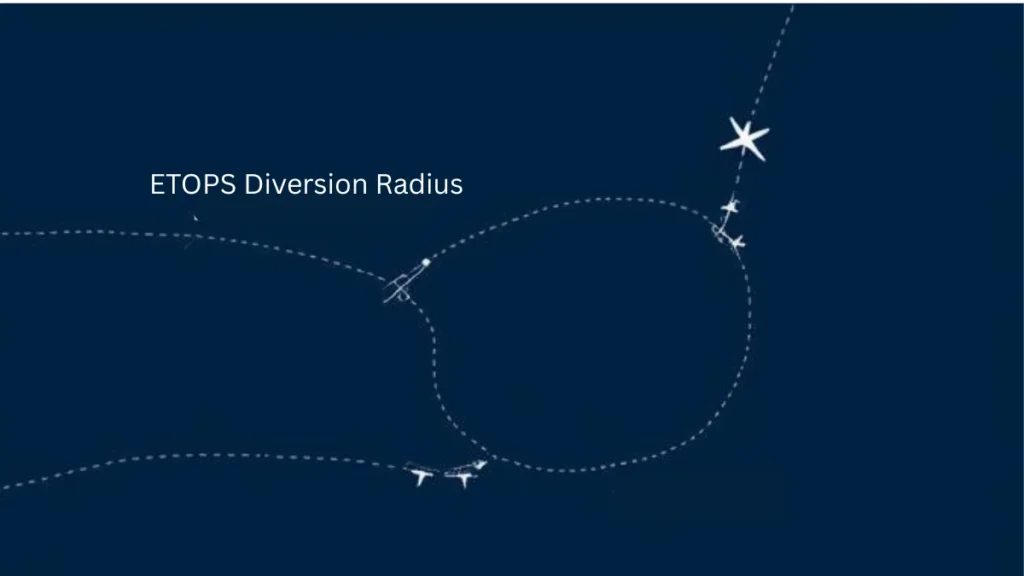
The forthcoming No. 2 Regulations will introduce substantive ETOPS operational changes. Two changes have been signaled:
- Operators of two-engine aircraft will have greater flexibility in how far they may operate from diversion airports.
- Operators of aircraft with more than two engines will, for the first time, be required to consider their distance from diversion airports as part of their operational planning.
These changes will bring UK requirements into alignment with international ICAO standards. The No. 2 Regulations must be enacted before the powers under the Retained EU Law (Revocation and Reform) Act 2023 expire in June 2026.
Compliance officers should monitor the UK statutory instrument register for the No. 2 Regulations and assess their ETOPS approval documentation and extended diversion time operational procedures in advance.Background: Retained EU Law and the Basic Regulation
The UK left the EU in 2021. Since then, the CAA has operated under assimilated EU aviation law — primarily Regulation (EU) 2018/1139, known as the Basic Regulation. The Retained EU Law (Revocation and Reform) Act 2023 gave the UK government powers to amend this assimilated law by statutory instrument.
The 2026 Amendment Regulations are one of several instruments being used to diverge from or update retained EU aviation law to suit UK-specific regulatory needs.
Source Documents
- The Aviation Safety (Amendment) Regulations 2026 — legislation.gov.uk
- House of Lords Hansard, April 15, 2026 — Aviation Safety (Amendment) Regulations 2026 debate
- UK CAA — Permissions, Approvals, Variations and Exemptions — caa.co.uk
UK Aviation Safety Amendment Regulations: FAQ
Does the expanded exemption power mean the CAA will grant exemptions more freely?
No. The CAA will only grant exemptions where applicants can demonstrate a high level of aviation safety. The change is to the process — removing the urgency precondition — not to the required safety standard.
How long does a CAA exemption application take?
The CAA aims to make a decision within 30 working days of receiving the complete documentation, including relevant Operations Manual extracts.
Can exemptions be used to align with EASA requirements that differ from UK CAA requirements?
Potentially, depending on the specific requirement. The expanded exemption route gives the CAA a mechanism to address divergence scenarios. Each case is assessed individually. There is no general equivalence arrangement between UK CAA and EASA.
What happened to the criminal sanction that was removed?
The removed provision covered extended diversion time operations (EDTO). The CAA had never used it. The government determined that existing enforcement tools — including revocation of approvals and limitation of AOCs — were adequate without it.
Does this affect operators on the Irish or EU register operating into the UK?
No. The Aviation Safety (Amendment) Regulations 2026 govern the UK CAA’s powers over UK-approved organisations. EU operators are regulated by EASA and their national competent authorities.
Related Reading:
- UK Boosts Global Aviation Safety and Sustainability with CAD 2.2 Million Support to ICAO
- UK Sustainable Aviation Fuel Act 2026: Mandatory Blending Requirements, Revenue Certainty, and Compliance Obligations Explained
- UK CAA Summer 2026 Consultation Roundup: UTM, UAS Policy, VTOL, Aerodromes and TSO
Editorial note: This article is based on the Aviation Safety (Amendment) Regulations 2026 (SI 2026), the associated Explanatory Memorandum published by the Department for Transport, and the Parliamentary record of the House of Lords Grand Committee debate of 15 April 2026. Compliance officers should verify current instrument status at legislation.gov.uk before making operational decisions.
Researched and reviewed using official UK Government, Department for Transport, and UK CAA regulatory sources.