
What do the FAA 5G radio altimeter ADs require for Canadian airspace?
FAA ADs 2026-13-02 and FAA-2026-7208, effective July 1, 2026, require operators to revise their Airplane Flight Manual to incorporate limitations on certain operations that depend on radio altimeter data when flying in Canadian airspace, where 5G Lower C-Band interference protections were reduced from July 1, 2026.
Why did Canada’s 5G interference environment worsen for aviation on July 1, 2026?
From July 1, 2026, ISED Canada removed or substantially reduced the 5G Lower C-Band protection mitigations established in 2023 — including airport exclusion zones, elevation masks, and tilt restrictions. This left non-radio-altimeter-tolerant aircraft exposed to interference that can degrade thrust reverser, spoiler, and speedbrake deployment on landing.
Quick Compliance Summary
| Regulatory body | Federal Aviation Administration (FAA) |
| AD numbers | 2026-13-02 (all transport/commuter category) and FAA-2026-7208 (Boeing 737 MAX family specifically) |
| What changed | Radio altimeters cannot be relied upon in Canadian airspace from July 1, 2026, due to worsening 5G Lower C-Band interference |
| Required action | Revise the Airplane Flight Manual (AFM) to incorporate limitations prohibiting certain operations requiring radio altimeter data when operating in Canadian airspace |
| Compliance deadline | July 1, 2026 — already effective |
| Who must act | All operators of transport and commuter category airplanes with radio altimeters flying to, from, or within Canadian airspace |
| Source | Federal Register Vol. 91, No. 125, June 30, 2026 — FR Doc 2026-13162 and FR Doc 2026-13208 |
Who Should Read This
This update is directly relevant to:
- Directors of Operations for airlines and charter operators serving Canada
- Directors of Maintenance responsible for AFM currency
- Flight Operations and Standards departments
- Continuing Airworthiness Managers (CAMs)
- Crew Training and Standards teams
- Dispatch and Operational Control departments
If your operation includes any flight to, from, or within Canada in a transport- or commuter-category airplane equipped with a radio altimeter, this AD requires immediate action. It became effective yesterday.
At a Glance
| Item | Details |
|---|---|
| AD 1 | FAA AD 2026-13-02 |
| Amendment | 39-23384 |
| Docket | FAA-2026-4659 |
| Applicability | All transport and commuter category airplanes equipped with a radio altimeter |
| AD 2 | Docket FAA-2026-7208 |
| Applicability | Boeing 737-8, 737-9, and 737-8200 (MAX family) specifically |
| Effective date | July 1, 2026 |
| Required action | AFM revision incorporating radio altimeter operational limitations in Canadian airspace |
| Originating authority | Transport Canada notification, late March 2026 |
| Rulemaking type | Final rule; request for comments — good-cause exception to normal notice-and-comment process |
What Changed
The FAA published two related airworthiness directives on June 30, 2026. Both became effective July 1, 2026.
The trigger was not a new aircraft defect. It was a change to Canadian telecommunications policy.
In late March 2026, Transport Canada notified the FAA that 5G Lower C-Band interference protections in Canadian airspace would change significantly from July 1, 2026. The protections established by Innovation, Science and Economic Development Canada (ISED) in 2023 — exclusion zones around airports, protection zones, elevation masks, and tilt restrictions on 5G emitters — are being removed or substantially reduced.
From July 1, only airplanes with radio-altimeter-tolerant systems are adequately protected. Aircraft without radio altimeter tolerance are now exposed to an unsafe condition the FAA had previously identified in AD 2023-10-02 for US domestic operations.
The FAA invoked the good-cause exception to bypass the standard notice-and-comment rulemaking period. There was no time for a standard NPRM cycle before the July 1 Canadian policy change took effect.
Why It Matters
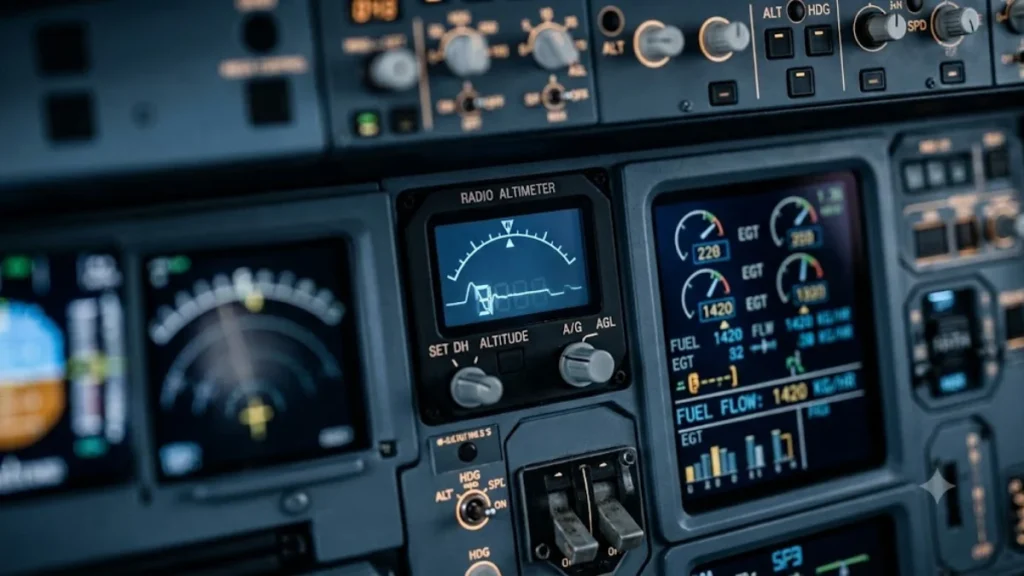
Radio altimeters are critical safety systems. They are not simply used to display altitude to pilots. Multiple aircraft systems depend on radio altimeter data to function correctly, including:
- Thrust reversers — deployment triggered by radio altimeter confirmation of touchdown
- Ground spoilers and speedbrakes — activation tied to radio altimeter data
- Idle thrust management on landing
When a radio altimeter is affected by interference from 5G Lower C-Band signals, it may fail to provide reliable data. When that happens, the systems that depend on it may not function correctly.
The specific consequences the FAA identifies are longer-than-normal landing distances and longer rejected takeoff distances. Thrust reverser deployment may be delayed. Spoiler and speedbrake deployment may be affected. Idle thrust may not engage as expected.
The result could be a runway excursion — regardless of weather conditions or approach type.
This is not a marginal or theoretical risk. It is the same unsafe condition that the FAA addressed with AD 2023-10-02 for US airspace in 2023. Canada is now entering a comparable interference environment.
Who Is Affected
AD 2026-13-02 is the broadest of the two. It applies to all transport- and commuter-category airplanes equipped with a radio altimeter. This captures effectively every airliner and turboprop commuter aircraft operating into Canada.
Docket FAA-2026-7208 targets the Boeing 737 MAX family specifically — the 737-8, 737-9, and 737-8200. The Boeing-specific AD addresses additional system interactions particular to the MAX’s architecture that warranted a separate, type-specific directive.
Aircraft with radio-altimeter-tolerant systems — those already certified to operate in the US 5G interference environment under the framework established by AD 2023-10-02 — are better positioned, but operators should still confirm their specific system’s tolerance certification status and whether the Canadian interference environment (3.45–3.98 GHz) is covered.
Required Action
AFM revision. The required action is an AFM revision incorporating limitations prohibiting certain operations that require radio altimeter data when operating in Canadian airspace.
This is an operational and documentation action, not a hardware modification. No new equipment is required. The limitation is documented in the Flight Manual, and flight crews must be briefed accordingly.
The specific operations prohibited will be defined in the AFM revision instructions referenced in the AD. Operators should obtain the applicable revision immediately from their aircraft manufacturer or type certificate holder.
Crew briefing and dispatch procedures
Flight Operations and Standards teams should brief all crews operating into Canada on the new AFM limitations as soon as the revision is incorporated. Dispatch procedures for Canadian routes should be reviewed to confirm alignment with the new limitations.
For aircraft already radio-altimeter-tolerant
Confirm with your aircraft manufacturer or maintenance organization whether your specific aircraft’s radio altimeter system is certified tolerant under the Canadian 5G environment, and document that confirmation for your records.
Operational Impact
This AD affects every operator with Canadian operations — scheduled airlines, Part 135 charter operators, and business aviation operators flying to Canada.
The AFM revision itself does not ground aircraft. It imposes operational limitations. The practical impact depends on what specific operations are prohibited — operators should review the AFM revision text carefully to understand exactly what is restricted and under what conditions.
For operations into major Canadian airports — Toronto Pearson, Vancouver, Montreal, Calgary, Ottawa — the removal of airport exclusion and protection zones from July 1 means the interference environment is now active across the airfield environment, not just in outer areas.
Act immediately. The AD is already in effect. Operating an affected aircraft into Canadian airspace without the AFM revision in place is a violation of 14 CFR 39.7.
Background: The 5G / Radio Altimeter Issue
This AD is the latest chapter in a regulatory story that began in 2021, when the US FAA, airlines, and the telecommunications industry clashed over the rollout of 5G Lower C-Band spectrum. Radio altimeters operate in the 4.2–4.4 GHz band. 5G Lower C-Band deployment in the adjacent 3.7–3.98 GHz range was found to cause interference under certain conditions.
In the US, ISED-equivalent mitigations managed the risk through a combination of airport exclusion zones, power limits, and tilt restrictions on 5G tower antennas near airports. AD 2023-10-02 established the US framework.
Canada followed a similar mitigation approach from 2023. As of July 1, 2026, those mitigations are being substantially reduced. Canada’s telecommunications sector has advanced its 5G Lower C-Band rollout to a point where the 2023 protections are no longer being maintained at the same level.
The result is a rapid regulatory response from Transport Canada and the FAA — two ADs were published the day before the change took effect.
Key Dates
| Event | Date |
|---|---|
| FAA AD 2023-10-02 (US domestic 5G framework) | 2023 |
| Transport Canada notifies FAA of July 1, 2026 changes | Late March 2026 |
| FAA AD 2026-13-02 and FAA-2026-7208 published | June 30, 2026 |
| Both ADs effective / Canadian 5G protections reduced | July 1, 2026 |
Source Documents
- Federal Register Vol. 91, No. 125, June 30, 2026 — FR Doc 2026-13162 (AD 2026-13-02)
- Federal Register Vol. 91, No. 125, June 30, 2026 — FR Doc 2026-13208 (Boeing 737 MAX)
- Transport Canada 5G and aviation — tc.canada.ca/en/aviation
- FAA AD 2023-10-02 (US domestic precedent AD)
FAQ About FAA 5G Radio Altimeter ADs
What exactly does the AFM revision prohibit?
The AFM revision incorporates limitations on certain operations that require radio altimeter data in Canadian airspace. The specific operations restricted are defined in the AFM revision text issued by the aircraft manufacturer or type certificate holder. Operators must obtain and review the applicable revision immediately.
Does this AD ground aircraft flying to Canada?
No. The AD requires an AFM revision imposing limitations — it does not ground aircraft. However, operating in Canadian airspace without the AFM revision in place violates 14 CFR 39.7.
Why did the FAA bypass the normal NPRM rulemaking process?
The FAA invoked the good-cause exception to the standard notice-and-comment rulemaking period. The Canadian 5G mitigation change took effect July 1, 2026 — there was insufficient time for a standard NPRM cycle. The FAA classified this as an immediate unsafe condition requiring immediate action.
What is the difference between the two ADs?
AD 2026-13-02 applies broadly to all transport- and commuter-category airplanes with radio altimeters. The Boeing-specific AD (Docket FAA-2026-7208) covers the 737-8, 737-9, and 737-8200 and addresses additional system interactions specific to the MAX family that warranted a separate directive.
Does this apply to business jets operating to Canada?
Yes. All transport and commuter category airplanes equipped with a radio altimeter are covered by AD 2026-13-02. Business jets certificated in the transport category fall within scope.
What is the difference between the Canadian and US 5G interference environments?
Both operate in the 5G Lower C-Band frequency range. The US environment (3.7–3.98 GHz) was addressed by AD 2023-10-02. Canada’s environment (3.45–3.98 GHz) is broader and, as of July 1, 2026, less protected at airports than it was under the 2023 ISED mitigations.
Related Reading:
- Transport Canada: Air Carriers Must File Updated Proof of Insurance…
- Transport Canada Proposes Mandatory Remote ID, Community-Based ….
- Transport Canada Proposes ICAO-Aligned Air Carrier Security Program…
aviationregwatch.com publishes regulatory intelligence for aviation compliance professionals. This article is an informational summary, not legal or airworthiness advice. Consult your aircraft manufacturer, type certificate holder, or legal counsel for compliance decisions.