
Quick Answers
What does FAA AD 2026-14-06 require for CFM LEAP-1A engines?
FAA AD 2026-14-06, effective July 27, 2026, supersedes AD 2025-21-03 and requires initial and repetitive borescope inspections of HPT rotor stage 1 blades on LEAP-1A engines that have accumulated more than 1,100 South Asia takeoffs. South Asia is defined as Bangladesh, Bhutan, India, Maldives, Nepal, and Sri Lanka.
Why are LEAP-1A engines operating in South Asia at higher risk of HPT blade deterioration?
CFM determined that dust build-up in the South Asia region — Bangladesh, Bhutan, India, Maldives, Nepal, and Sri Lanka — causes accelerated HPT rotor stage 1 blade airfoil distress beyond what was modeled for other regions. The mechanism is dust composition and concentration at high-traffic South Asian airports.
Quick Compliance Summary
| Regulatory body | Federal Aviation Administration (FAA) |
| AD number | 2026-14-06 — Amendment 39-23407 |
| Docket | FAA-2026-7214 |
| Engines affected | CFM LEAP-1A23, -1A24, -1A24E1, -1A26, -1A26CJ, -1A26E1, -1A29, -1A29CJ, -1A30, -1A32, -1A33, -1A33B2, -1A35A |
| Aircraft powered | Airbus A320neo family |
| What changed | Supersedes AD 2025-21-03. Expands affected region to include South Asia. Updates to Service Bulletin Issue 004-00. Sister engine inspection clarified |
| Required action | Repetitive borescope inspections (BSIs) of HPT rotor stage 1 blades. On-condition replacement if required |
| Compliance deadline | July 27, 2026 |
| US registry impact | Zero US-registered engines currently in scope |
| Regional focus | South Asia — Bangladesh, Bhutan, India, Maldives, Nepal, Sri Lanka |
| Source | Federal Register Vol. 91, No. 131, July 10, 2026 — FR Doc 2026-13979 |
Who Should Read This
This update is directly relevant to:
- Continuing Airworthiness Managers (CAMs) for A320neo fleets operating South Asian routes
- Directors of Maintenance for carriers with significant India, Bangladesh, or Nepal operations
- Engine shop managers at Part 145 organizations with LEAP-1A shop capability
- MRO Planning Teams scheduling LEAP-1A shop visits
- Regulatory Affairs staff at non-US airlines operating A320neo family aircraft
A note on US applicability. The FAA confirmed zero US-registered engines are in scope. The FAA waived notice-and-comment rulemaking on that basis. This AD is issued under the bilateral airworthiness agreement for international operators and organizations. Non-US carriers — particularly those with significant South Asian operations — and their supporting MROs are the primary audience for this directive.
At a Glance
| Item | Details |
|---|---|
| AD Number | 2026-14-06 |
| Amendment | 39-23407 |
| Docket | FAA-2026-7214 |
| JASC Code | 7250 — Turbine Section |
| Engines | LEAP-1A23 through LEAP-1A35A (all variants) |
| Aircraft | Airbus A320neo family |
| Effective Date | July 27, 2026 |
| Supersedes | AD 2025-21-03 (Amendment 39-23175) |
| Group 1 engines | LEAP-1A29, -1A29CJ, -1A30, -1A32, -1A33, -1A33B2, -1A35A |
| Group 2 engines | LEAP-1A23, -1A24, -1A24E1, -1A26, -1A26CJ, -1A26E1 |
| Threshold (both groups) | More than 1,100 South Asia takeoffs AND above part cycle thresholds |
| BSI interval (Group 1) | Every 150 flight cycles |
| BSI interval (Group 2) | Every 300 flight cycles |
| US registry impact | Zero engines — bilateral agreement basis |
| Comment deadline | August 24, 2026 |
What Changed
The FAA published AD 2026-14-06 on July 10, 2026. It is effective July 27, 2026.
This AD supersedes AD 2025-21-03, issued December 12, 2025.
Three things changed.
First: the affected region has been expanded.
AD 2025-21-03 covered a defined list of regions. Since that AD was issued, CFM has determined that engines operating in the South Asia region — Bangladesh, Bhutan, India, Maldives, Nepal, and Sri Lanka — are susceptible to accelerated deterioration of HPT rotor stage 1 blades. The mechanism is dust. Dust buildup in the South Asian environment causes accelerated airfoil distress beyond what was modeled in the original list of affected regions.
Second: the service bulletin has been updated
This AD now requires actions in accordance with CFM Service Bulletin LEAP-1A-72-00-0485-01A-930A-D, Issue 004-00, dated May 19, 2026. The previous AD referenced Issue 003-00. Operators holding approved maintenance procedures under Issues 001-00, 002-00, or 003-00 receive credit for previous work — but future inspections must use Issue 004-00.
Third: the sister engine inspection requirement has been clarified
Following a query from Airbus India, the FAA clarified that the conditional sister engine inspection is not required if the sister engine already has an affected part installed and has already met certain inspection conditions.
The FAA considers this AD an interim action. CFM is developing a terminating action. Once available, further rulemaking may follow.
Why It Matters
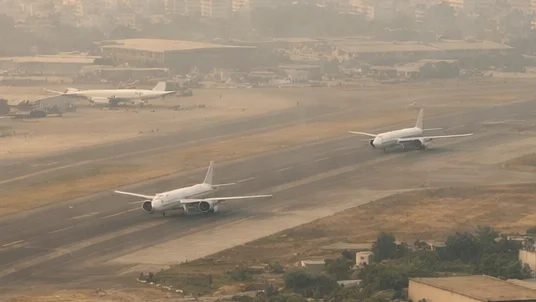
The underlying safety event was serious. Two in-flight shutdowns were caused by cracks in the HPT rotor stage 1 blades. The investigation found that the blades were cracking due to operational stress — particularly in high-dust environments.
The consequence chain is direct. Failure of the HPT rotor stage 1 blades results in engine failure, in-flight shutdown, loss of thrust control, and consequent loss of airplane control.
The South Asia expansion matters for a specific reason. Dust composition and concentration in the South Asia region — particularly around high-density airports in India and Bangladesh — is materially different from cleaner-air operating environments. CFM’s updated analysis found that dust build-up accelerates blade airfoil distress at a rate that the original inspection thresholds did not anticipate for this region.
Carriers operating high-frequency routes to and within South Asia — particularly those with a mix of India, Bangladesh, Nepal, and Sri Lanka operations — should treat this as a priority review item even if their engines are not yet at the threshold.
Applicability — Thresholds and Groups
Not all LEAP-1A engines are immediately in scope. Applicability requires three conditions to be met simultaneously:
- HPT rotor stage 1 blade with one of six specific part numbers installed (P/N 2747M92P01, 2553M91G03, 2553M91G05, 2553M91G06, 2553M91G07, or 2553M91G08)
- More than 1,100 South Asia takeoffs accumulated on the blade
- Above the part cycle since new (PCSN) threshold — 2,500 PCSN for Group 1, 5,100 PCSN for Group 2
South Asia takeoff definition: Any takeoff accomplished in Bangladesh, Bhutan, India, Maldives, Nepal, or Sri Lanka.
Operators with mixed-route networks need to track South Asia takeoffs separately. An engine accumulating cycles globally but with limited operations in South Asia may not reach the 1,100 takeoff threshold quickly. An engine on a dense India domestic or regional network may reach it sooner than expected.
Required Action
Group 1 Engines (LEAP-1A29, -1A29CJ, -1A30, -1A32, -1A33, -1A33B2, -1A35A)
Initial BSI: Within 100 flight cycles after accumulating 1,100 South Asia takeoffs, before the HPT rotor stage 1 blade accumulates 2,500 PCSN, or within 100 flight cycles after the July 27, 2026 effective date — whichever occurs later.
Repetitive BSI: Every 150 flight cycles since the last BSI.
Group 2 Engines (LEAP-1A23, -1A24, -1A24E1, -1A26, -1A26CJ, -1A26E1)
Initial BSI: Within 100 flight cycles after accumulating 1,100 South Asia takeoffs, before the HPT rotor stage 1 blade accumulates 5,100 PCSN, or within 100 flight cycles after the July 27, 2026 effective date — whichever occurs later.
Repetitive BSI: Every 300 flight cycles since the last BSI.
Inspection Disposition
Based on BSI results, either re-inspect at reduced intervals or replace HPT rotor stage 1 blades, using the criteria in CFM SB LEAP-1A-72-00-0485-01A-930A-D, Issue 004-00.
Sister Engine Inspection
If BSI results require re-inspection or blade replacement within 50 flight cycles, then within 5 flight cycles after completing the primary engine inspection, inspect or replace the sister engine’s HPT rotor stage 1 blades using the procedures in CFM SB Issue 004-00.
Exception: If the sister engine has accumulated 50 FCs or fewer (Group 1) or 100 FCs or fewer (Group 2) since its last HPT blade BSI, no further action is required on the sister engine.
Cost Context
| Action | Labor | Parts | Cost per engine |
|---|---|---|---|
| BSI (base inspection) | 4 work-hours × $85/hr = $340 | $0 | $340 |
| HPT blade replacement (on-condition) | 150 work-hours × $85/hr = $12,750 | $988,200 | $1,000,950 |
The replacement cost figure — approaching $1 million per engine — underscores why early detection through BSI is the operationally and financially rational approach.
Operational Impact
For carriers with significant South Asian operations — particularly major Indian carriers, Bangladeshi operators, and regional carriers in Nepal and Sri Lanka — this AD imposes a structured South Asia takeoff-tracking obligation.
Engines accumulating cycles quickly on dense India domestic or international operations may approach the 1,100 South Asia takeoff threshold faster than anticipated. Begin tracking now, before the threshold is reached, to avoid a compressed compliance window.
For MRO organizations with LEAP-1A shop capability: the update from Issue 003-00 to Issue 004-00 of the service bulletin should be reflected in your approved maintenance data before the July 27 effective date. Confirm with CFM that your shop is holding the current issue.
For CAMOs managing A320neo fleets, fleet-wide South Asia takeoff tracking should be established as a maintenance-planning parameter if it is not already in place. The sister engine inspection trigger — based on 50 or 100 flight cycles since the last BSI — requires coordination between primary and sister engine maintenance records.
Key Dates
| Event | Date |
|---|---|
| AD 2025-21-03 issued (prior AD) | December 12, 2025 |
| CFM SB Issue 004-00 published | May 19, 2026 |
| FAA AD 2026-14-06 published | July 10, 2026 |
| AD 2026-14-06 effective | July 27, 2026 |
| Comment deadline | August 24, 2026 |
Source Documents
- Federal Register Vol. 91, No. 131, July 10, 2026 — FR Doc 2026-13979
- CFM SB LEAP-1A-72-00-0485-01A-930A-D, Issue 004-00, May 19, 2026 — contact CFM at aviation.fleetsupport@ge.com or (877) 432-3272
- AD Docket: regulations.gov, Docket No. FAA-2026-7214
- FAA contact: Mehdi Lamnyi — mehdi.lamnyi@faa.gov, (781) 238-7743
FAQ
Are any US-registered aircraft affected?
No. The FAA confirmed zero US-registered engines are currently in scope. The FAA waived notice-and-comment rulemaking on that basis. The AD is issued under the bilateral agreement framework for international operators.
What is a “South Asia takeoff” under this AD?
Any takeoff accomplished in Bangladesh, Bhutan, India, Maldives, Nepal, or Sri Lanka. All other takeoffs do not count toward the 1,100 South Asia takeoff threshold.
Why does South Asia specifically cause accelerated blade deterioration?
CFM’s analysis identified dust build-up as the root mechanism. The dust composition and concentration in South Asia cause accelerated distress of HPT rotor stage 1 blade airfoils beyond what was modeled for other regions.
I completed a BSI under AD 2025-21-03 using Issue 003-00. Does that count?
Yes. The AD provides credit for initial BSIs performed under Issues 001-00, 002-00, or 003-00. Future repetitive BSIs must use Issue 004-00.
When is the sister engine inspection required?
When BSI results require re-inspection or replacement within 50 flight cycles, the sister engine must be inspected within 5 flight cycles of the primary inspection. No action is needed on the sister engine if it has accumulated 50 FCs (Group 1) or 100 FCs (Group 2) or less since its own last BSI.
What is the terminating action?
CFM is developing a terminating action. It has not been published yet. The FAA has stated it will consider further rulemaking once the terminating action is available.
Is reporting to CFM required?
No. The AD explicitly excludes the CFM service bulletin’s reporting requirement. No reporting to CFM is required under this FAA AD.
Related Reading
aviationregwatch.com publishes regulatory intelligence for aviation compliance professionals. This article is an informational summary, not legal or airworthiness advice. Consult your engine manufacturer, CAMO, or legal counsel for compliance decisions.